


Hey there! As a supplier of monocrystalline solar panels, I often get asked, "Are monocrystalline solar panels more expensive than polycrystalline?" Well, let's dive right into it and break down the costs, benefits, and all that jazz.
First off, let's talk about what these two types of solar panels are. Monocrystalline solar panels are made from a single crystal structure. They're usually recognized by their dark color and uniform look. On the other hand, polycrystalline solar panels are made from multiple crystals, which gives them a speckled, blueish appearance.
Now, to answer the big question: yes, monocrystalline solar panels are generally more expensive than polycrystalline ones. But why is that? It all boils down to the manufacturing process. Making monocrystalline panels is a more complex and energy - intensive process. You need to grow a single large crystal of silicon, which requires precise control of temperature and other conditions. This process is not only time - consuming but also uses more resources, driving up the cost.
In contrast, polycrystalline panels are made by melting multiple fragments of silicon together. It's a simpler and quicker process, so the production cost is lower. That's why you can usually find polycrystalline panels at a more budget - friendly price.
But here's the thing: price isn't the only factor to consider when choosing solar panels. Efficiency is a huge deal. Monocrystalline solar panels are more efficient at converting sunlight into electricity. They can reach efficiency levels of around 18 - 22%, while polycrystalline panels typically have an efficiency of 15 - 17%. What does this mean for you? Well, if you have limited roof space, monocrystalline panels are a better choice. You'll need fewer panels to generate the same amount of electricity compared to polycrystalline panels.
Let's say you're looking to power a small home. With monocrystalline panels, you can get away with a smaller array. This can be a real advantage, especially if your roof has limited area or if you want to keep the visual impact of the panels to a minimum.
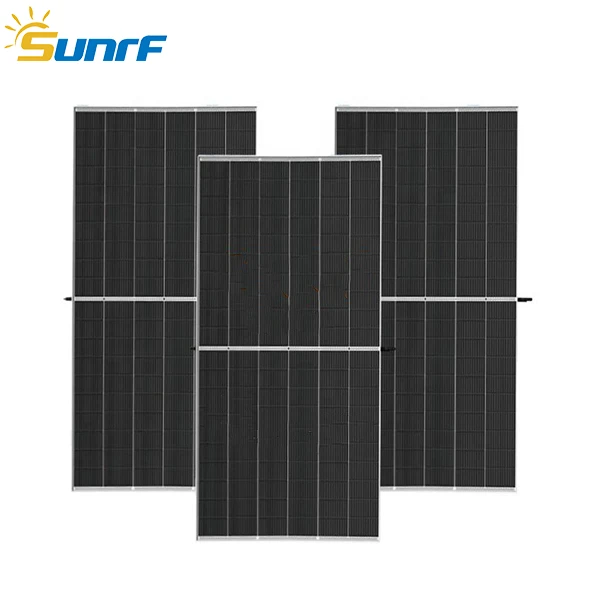

Another aspect is the lifespan. Monocrystalline solar panels tend to have a longer lifespan. They're built to last, often with warranties of 25 - 30 years. Polycrystalline panels usually have a lifespan of around 20 - 25 years. Over the long run, the higher initial cost of monocrystalline panels might be offset by their longer lifespan and better performance.
Now, let's talk about the real - world performance. Monocrystalline panels perform better in low - light conditions. They can still generate a decent amount of electricity on cloudy days or in the early morning and late afternoon when sunlight is less intense. Polycrystalline panels, while they work well in bright sunlight, may not be as efficient in these less - than - ideal conditions.
If you're in an area with a lot of cloudy days or if you want your solar system to be as productive as possible throughout the day, monocrystalline panels are the way to go.
I know what you're thinking: "Okay, but those monocrystalline panels are still more expensive. Is it really worth it?" Well, it depends on your specific situation. If you have a tight budget and plenty of roof space, polycrystalline panels might be the right choice for you. They'll still help you save on electricity bills and reduce your carbon footprint.
However, if you're looking for the best long - term investment, have limited space, or want the highest possible efficiency, then monocrystalline panels are worth the extra cost.
At our company, we offer a range of high - quality monocrystalline solar panels. For example, our 182mm Mono Cell 540 - 550W Solar Panel is a great option for medium - to - large - scale installations. It combines high efficiency with reliable performance. And if you need even more power, our 550W - 750W High Efficiency Solar Panel is designed to meet the demands of commercial and industrial projects.
We understand that investing in solar panels is a big decision. That's why we're here to help you every step of the way. Whether you're a homeowner looking to go solar or a business owner wanting to reduce your energy costs, we can provide you with the right solution.
If you're interested in learning more about our monocrystalline solar panels or want to discuss your specific needs, don't hesitate to reach out. We're always happy to have a chat and see how we can help you make the most of solar energy.
In conclusion, while monocrystalline solar panels are more expensive than polycrystalline ones, they offer higher efficiency, longer lifespan, and better performance in various conditions. It's all about finding the right balance between cost and benefits for your situation.
References:
- Solar Energy Industries Association (SEIA) reports on solar panel technology and costs.
- Industry research papers on the manufacturing processes of monocrystalline and polycrystalline solar panels.


