


Your Professional Polycrystalline Solar Panel Manufacturer!
Zhejiang Shengyang New Energy Co., Ltd., a new energy company established in 2004, specializes in energy storage battery packs, portable power supplies, home energy storage systems, inverters, and other products. Shengyang has established long-term strategic partnerships with thousands of overseas new energy industry clients. We are committed to creating maximum value for our clients and sincerely look forward to collaborating with related companies and industries both domestically and internationally.
-
![N Type Bifacial Solar Panels 730w 740w 750w]() N Type Bifacial Solar Panels 730w 740w 750wIndustry-leading cell production with 100um thin wafer and HJT encapsulation technologyHighest energy yield due to the most stable power temperature coefficient and ultra-high bifacialityN-type
N Type Bifacial Solar Panels 730w 740w 750wIndustry-leading cell production with 100um thin wafer and HJT encapsulation technologyHighest energy yield due to the most stable power temperature coefficient and ultra-high bifacialityN-type -
![440-555W MBB HALF-CELL MONO PV MODULE]() 440-555W MBB HALF-CELL MONO PV MODULEHigh output power. Better power generation under shadows. Strong anti-hot spot ability. Strong mechanical load capacity. Super strong frame. 1500V system voltage.
440-555W MBB HALF-CELL MONO PV MODULEHigh output power. Better power generation under shadows. Strong anti-hot spot ability. Strong mechanical load capacity. Super strong frame. 1500V system voltage.


Why Choose Us
Patent Certificate
We have obtained eight patents and ISO 9001 quality management system certification. Our products have received numerous international certifications, including CE, MSDS, and IEC, fully demonstrating our comprehensive strength in technology development and quality management.
Sales Market
Our customers span over 70 countries and regions worldwide, demonstrating our strong market expansion capabilities. We have established a comprehensive service system encompassing technology development, manufacturing, customized solutions, and localized after-sales service, enabling us to provide efficient and professional support to our global customers.
Customization Services
We offer a variety of configuration options to meet our customers' personalized needs. Through scientific system design, rational equipment selection, standardized installation procedures, and comprehensive maintenance services, we ensure a stable and reliable power supply for communications equipment, allowing for flexible adjustments to suit diverse application scenarios.
Product Parameters
|
Place of Origin |
Zhejiang , China |
|
Panel Dimensions |
2384*1303*33mm |
|
Brand Name |
SUNRF |
|
Model Number |
SUN-HBD 730-750W |
|
Name |
N type Bifacial solar panels |
|
Cell Type |
Half Cut 12BB solar cell |
|
Frame |
Anodized Aluminium Alloy |
|
Frame Color |
Black or Sliver |
|
Warranty |
25 Years Output Power Guarantee |
|
OEM |
Acceptable |
|
Application |
Solar Power System, UPS |
|
Certificate |
TUV/IEC61215//CE/TUV//PID/ISO |
|
Number of Cells |
132(6*22) |
|
Weight |
38.5KG |
Cost-effective: Polycrystalline solar panels are typically less expensive than monocrystalline panels because they are easier and less expensive to produce. This makes them an attractive option for those looking to install solar panels on a budget.
Durability: Polycrystalline solar panels are made of tough, tempered glass that can withstand a range of weather conditions. They are also resistant to corrosion and can last for many years with proper maintenance.
High-temperature resistance: Polycrystalline solar panels are designed to perform well even in high-temperature environments. They have a low-temperature coefficient, which means that they are less affected by temperature changes than other types of solar panels.
Low light performance: Polycrystalline solar panels can generate electricity even in low light conditions, such as on cloudy days. This makes them a good choice for areas with less sunlight.
Variety of sizes: Polycrystalline solar panels are available in a range of sizes, making them a flexible option for solar energy systems of all sizes. They can be used for both residential and commercial applications.

Applications of Polycrystalline Solar Panel
Residential Solar Panels:
Polycrystalline solar panel proved to be a low-cost solution for households who want to generate electricity for their own house and save money on their utility bills. The panels can be installed on a house, garage, etc.
Commercial Solar Panels:
Polycrystalline solar panels can be used for commercial applications too. Businesses and commercial properties need more energy which can be saved by installing polycrystalline solar panels on rooftops or anywhere with abundant sunlight.
Utility-scale solar panels:
Polycrystalline solar panels can be harnessed in colossal solar farms as well as gargantuan utility-scale installations. These installations consist of sprawling arrays of solar panels that engender a substantial abundance of electricity that may be infused into the grid to energize a vast region.
Standalone Solar Panels:
Polycrystalline solar panels can be employed in autonomous applications such as electrifying remote areas or off-grid setups. They can empower cabins, remote communication stations, water pumping systems, and other contraptions, where connection to the main grid is not viable or cost-effective.
Agricultural Applications:
Polycrystalline solar panels can be set in motion on farms and generate electricity for the purpose of agricultural operations. This methodology is dubbed agrivoltaics, which bestows dual advantages that are energy generation and land utilization.
Emergency and Disaster Relief:
Portable polycrystalline solar panels can be deployed for exigency or calamity relief scenarios to furnish power for charging devices, illuminating and indispensable equipment.
Composition of Polycrystalline Solar Panel
|
Component |
Description |
|
Silicon Wafer |
The primary material, serving as the base upon which the cell is built. Polycrystalline solar cells are primarily composed of silicon, a semiconductor material. |
|
Polycrystalline Silicon |
Consists of multiple silicon crystals or grains fused together during manufacturing. These grains are randomly oriented, resulting in a grainy or textured appearance. |
|
Front Contact |
A transparent conductive layer applied to the front surface of the silicon wafer, allowing sunlight to pass through while facilitating the collection of electric current generated by the solar cell. |
|
Crystallites |
Small crystals that make up the polysilicon, giving the material its typical metal flake effect. Multicrystalline usually refers to crystals larger than one millimeter. |
|
Semiconductor Material |
Silicon crystals serve as semiconductors. When exposed to sunlight, they absorb its energy and release electrons, producing an electric current that can be used to generate power. |
|
Metal Contacts |
Collect the produced electricity and send it to an inverter for conversion into a form suitable for powering buildings. |
|
Protective Layers |
Solar panels typically include protective glass and encapsulant layers to shield the silicon cells from environmental factors. |
Manufacturing Process of Polycrystalline Solar Panel
The manufacturing process for polycrystalline solar panels begins with the creation of a silicon ingot. High-purity silicon is melted in a crucible and then carefully cooled to form a solid block. This controlled cooling process allows multiple silicon crystals to form, resulting in the characteristic speckled appearance of polycrystalline cells. The ingot is then cut into thin wafers using precision wire saws.
Next, the wafers undergo a series of treatments to enhance their electrical properties. This includes texturing the surface to minimize reflectivity and applying an anti-reflective coating to improve light absorption. The wafers are then doped with impurities to create the essential p-n junction that enables the photovoltaic effect. Electrical contacts are screen-printed onto both sides of the cell, forming a grid-like pattern on the front and a solid layer on the back.
Individual cells are then interconnected using thin metal strips, creating a matrix of cells that form the anatomy of a solar cell. This cell matrix is laminated between layers of EVA (ethylene-vinyl acetate) and tempered glass to provide structural support and protection from the elements. Finally, a junction box is attached to the back of the panel, housing the electrical connections and bypass diodes that optimize performance under various conditions.
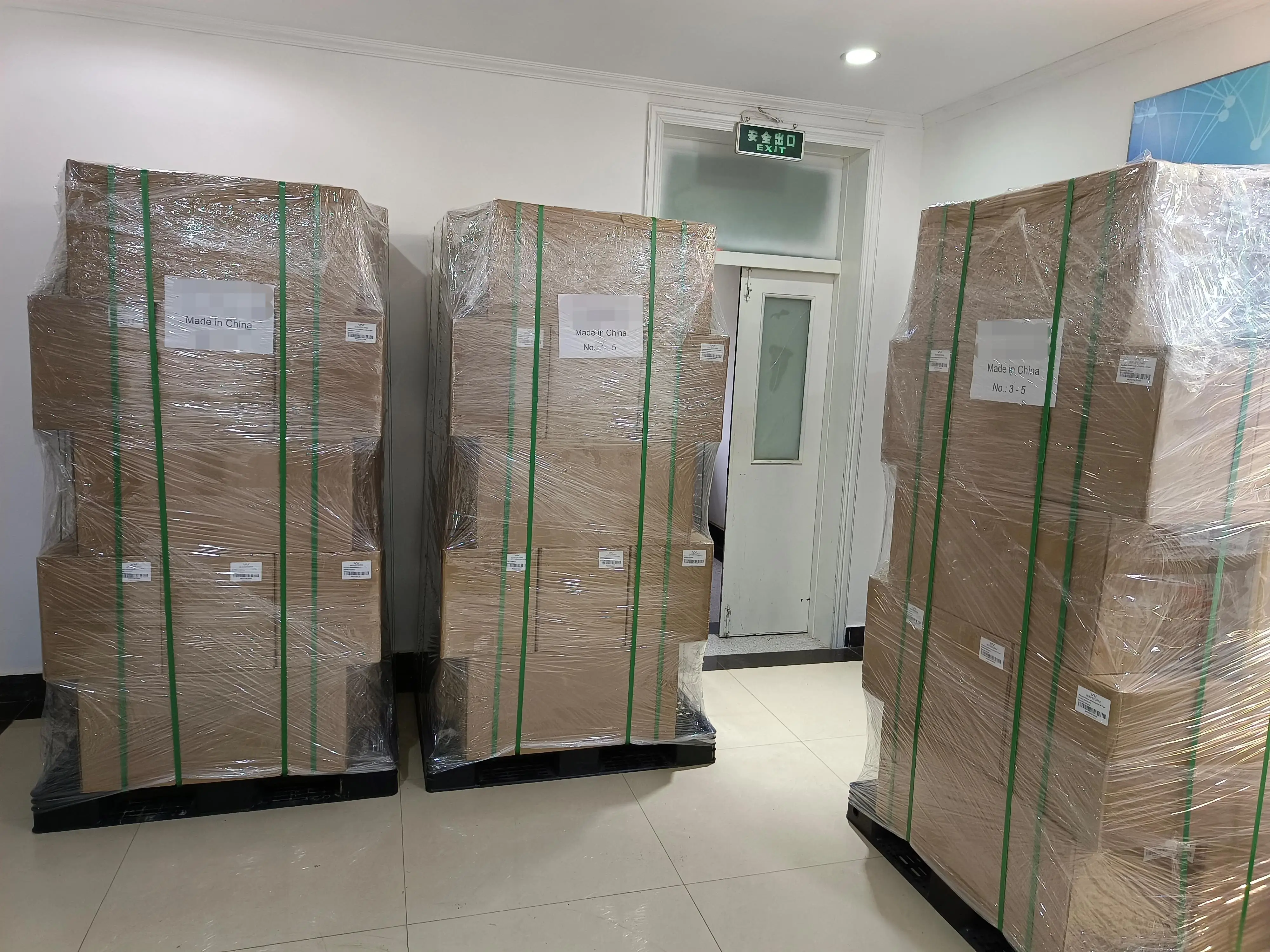
Packaging and Shipping

FAQ
As one of the leading polycrystalline solar panel manufacturers and suppliers in China, we warmly welcome you to buy custom made polycrystalline solar panel from our factory. Good service and quality products are available.
400 Watt Solar Panel, N Type Bifacial Solar Panels 730w 740w 750w, Roof Solar PanelsPopular Products


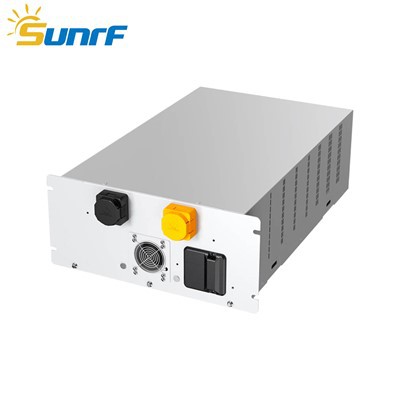

Advanced MPPT with up to 99.9% effciency
Up to 16A+16A PV input current
Safety...