


Your Professional Hybrid Inverter Supplier!
Zhejiang Shengyang New Energy Co., Ltd., a new energy company established in 2004, specializes in energy storage battery packs, portable power supplies, home energy storage systems, inverters, and other products. Shengyang has established long-term strategic partnerships with thousands of overseas new energy industry clients. We are committed to creating maximum value for our clients and sincerely look forward to collaborating with related companies and industries both domestically and internationally.
-
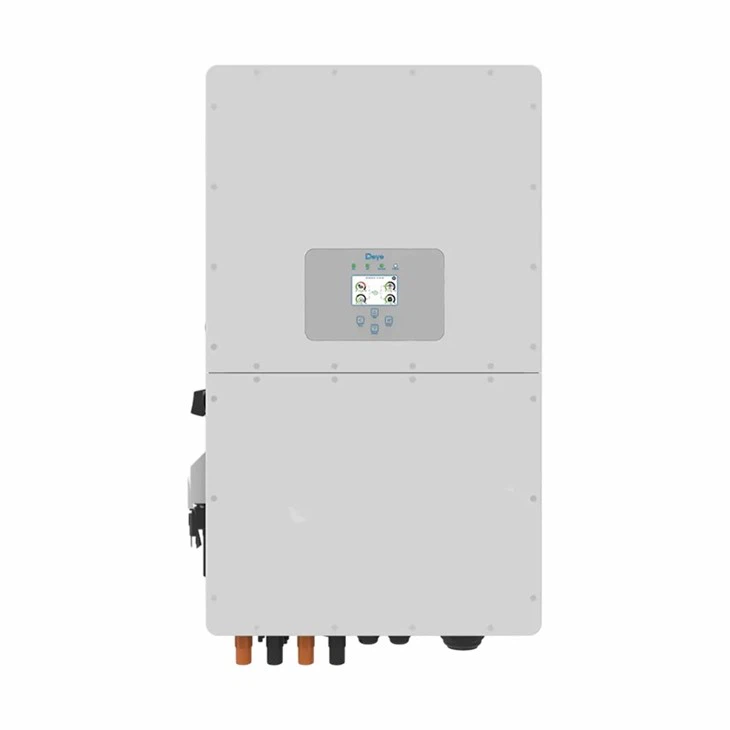
![Solar Storage Inverter for Home]() Solar Storage Inverter for HomeEfhciency. Advanced MPPT with up to 99.9% effciency. Up to 16A+16A PV input current. Safety. Comprehensive security from hardware to software. Multiple safety approvals.
Solar Storage Inverter for HomeEfhciency. Advanced MPPT with up to 99.9% effciency. Up to 16A+16A PV input current. Safety. Comprehensive security from hardware to software. Multiple safety approvals. -
![Solar Hybrid Inverter]() Solar Hybrid InverterFeatures. Pure sine wave output. Can support WIFI/GPRS. MPPT efficiency max 98%. BMS function for lithium battery. DC start & automatic self-diagnostic fuction. Automatically send signal to start
Solar Hybrid InverterFeatures. Pure sine wave output. Can support WIFI/GPRS. MPPT efficiency max 98%. BMS function for lithium battery. DC start & automatic self-diagnostic fuction. Automatically send signal to start -
![SUN-100/110K - G01 100KW Hybrid Inverter]() SUN-100/110K - G01 100KW Hybrid InverterThis inverter has extremely high conversion efficiency, can operate continuously for 24 hours, and has good stability and robustness.
SUN-100/110K - G01 100KW Hybrid InverterThis inverter has extremely high conversion efficiency, can operate continuously for 24 hours, and has good stability and robustness. -
![SUN-KTL 60 -110KW Smart Hybrid Inverter for Home Energy System]() SUN-KTL 60 -110KW Smart Hybrid Inverter for Home Energy SystemThis inverter is suitable for industrial and commercial energy storage as well as home energy storage systems. It features excellent quality and reasonable price, ensuring safety and stability. At
SUN-KTL 60 -110KW Smart Hybrid Inverter for Home Energy SystemThis inverter is suitable for industrial and commercial energy storage as well as home energy storage systems. It features excellent quality and reasonable price, ensuring safety and stability. At -
![30-50kw Three Phase Hybrid Inverter]() 30-50kw Three Phase Hybrid InverterSUN-29.9/30/35K-SG01HP3-EU-BM3. SUN-40/50K-SG01HP3-EU-BM4
30-50kw Three Phase Hybrid InverterSUN-29.9/30/35K-SG01HP3-EU-BM3. SUN-40/50K-SG01HP3-EU-BM4 -
![Three Phase Hybrid Inverter]() Three Phase Hybrid InverterSUN-5/6/8/10/12/15/20/25K-SG01HP3-EU-AM2
Three Phase Hybrid InverterSUN-5/6/8/10/12/15/20/25K-SG01HP3-EU-AM2


Why Choose Us
Patent Certificate
We have obtained eight patents and ISO 9001 quality management system certification. Our products have received numerous international certifications, including CE, MSDS, and IEC, fully demonstrating our comprehensive strength in technology development and quality management.
Sales Market
Our customers span over 70 countries and regions worldwide, demonstrating our strong market expansion capabilities. We have established a comprehensive service system encompassing technology development, manufacturing, customized solutions, and localized after-sales service, enabling us to provide efficient and professional support to our global customers.
Customization Services
We offer a variety of configuration options to meet our customers' personalized needs. Through scientific system design, rational equipment selection, standardized installation procedures, and comprehensive maintenance services, we ensure a stable and reliable power supply for communications equipment, allowing for flexible adjustments to suit diverse application scenarios.
Specification
|
MODELS |
SUN-SEI-4K |
SUN-SEI-4.6K |
SUN-SEI-5K |
SUN-SEI-6K |
Can Be |
|
OFF-GRID OUTPUT |
|||||
|
Rated Output Power |
4,000w |
4,600w |
5,500w |
6,000w |
|
|
Max.PeakPower |
8,000VA |
9,200VA |
11,000VA |
12,000VA |
|
|
Rated Output Voltage |
230Vac, single phase |
√ |
|||
|
Load Capacity of Motors |
3HP |
4HP |
|
||
|
Output Frequency Range |
50Hz ± 0.3Hz/60Hz ± 0.3Hz |
√ |
|||
|
Switching Time |
10ms (typical value) |
|
|||
|
ON-GRID OUTPUT |
|||||
|
Rated Output Power |
4,000w |
4,600W |
5,500w |
6,000w |
|
|
Max.Apparent Power |
8,000VA |
9,200VA |
11,000VA |
12,000VA |
|
|
Rated. Output Current |
17.4A |
20A |
24A |
26A |
|
|
Max.Output Current |
19.1A |
22A |
26.4A |
28.6A |
|
|
THDI |
<3% |
|
|||
|
Power Factor |
0.8 leading to 0.8 lagging |
|
|||
|
Rated Voltage |
230Vac, single phase |
|
|||
|
Frequency |
50Hz/60Hz |
||||
Pros of a Hybrid Inverter

Power Resiliency
One of the primary benefits of a hybrid inverter is its ability to provide power resiliency. With a hybrid inverter, you can store energy in batteries and use it when there is a power outage or during peak hours when electricity prices are high. This means you'll have access to reliable power even when the grid goes down.

Easily Retrofit Battery Storage
Another advantage of a hybrid inverter is that it can easily be retrofitted with battery storage. This means you can add batteries to your system at a later date, without having to replace your existing inverter. This makes it easy to scale your solar power system as your energy needs change over time.
Simplified Energy Monitoring
A hybrid inverter simplifies energy monitoring by allowing you to monitor your solar power system and battery storage from a single interface. This makes it easy to keep track of how much energy you're generating and using, and helps you optimize your energy usage for maximum efficiency.
Types of Hybrid Inverter
Inverter/Charger Hybrid Power Inverter
This option is the most common type of hybrid solar inverter, where the system can charge the batteries using power from the grid. Once a battery charge limit is reached — or electricity from the grid is disrupted — the batteries will kick in and provide energy. It also switches to AC power in battery mode during peak usage, eliminating power disruptions and increasing efficiency. Use this type of inverter for small spaces.
Integrated Hybrid Power Inverter
Some hybrid inverters employ maximum power point trackers (MPPTs) in their design. Although uncommon, these components save space by optimizing panel output and battery power.
Grid-tied Hybrid Power Inverter
Unlike regular inverters, grid-tied hybrid inverters connect your home to the power grid so you can sell back any surplus energy, saving you money on your electric bills. You have a backup source of electricity during peak loads, at night when your solar panels no longer produce power, or during inclement weather.
Hybrid Inverter Operating Mode
Solar Priority Mode: In this mode, the DC power generated is optimized, converted and then used to power connected loads directly. If the solar output is insufficient to meet the load demands, the inverter draws additional power from the battery or the grid. Excess solar, when available, is used to charge the battery, before any surplus is fed into the grid using net metering.
Battery Priority Mode: The inverter prioritizes using stored energy from the battery to power connected loads, while the solar generated is used to charge the battery. If the battery is fully charged, the excess power is fed into the grid.
Grid Priority Mode: Typically switched on when the grid power is cheaper, the inverter prioritizes using grid power to meet the load demands. Solar can be used to complement the supply, charge the battery or send to the grid.
Off-Grid Mode: Also known as standalone mode, the inverter operates independently from the grid, powering the loads using solar and stored battery power.
Backup Power Mode: The inverter switches to this mode when there is a grid outage and solar system fault. It draws energy from the battery to power essential loads. Once all is restored, the inverter automatically switches back to its previous mode.
Grid-Tied Mode: The inverter is connected to both the panels and the grid. Solar is used to power the loads, with any extra energy supplied to the grid. This mode is generally used when solar production exceeds consumption and the battery is fully charged.
Time-of-Used (ToU) Mode: This is an ‘electricity-rate-oriented' mode that allows the inverter to smartly optimize energy usage based on variable electricity rates. In this mode, the inverter can be programmed to channel solar and grid power to charge the battery and power loads during off-peak hours when electricity rates are lower; and discharge the battery to supply loads during peak hours when rates are higher.
Applications of Hybrid Inverter
Energy Independence:
Hybrid inverters are ideal for homeowners or businesses that want to reduce reliance on the grid and rely more on their own renewable energy systems. By storing excess energy in batteries during peak sunlight hours, users can consume it during the night or during power outages.
Battery Storage Systems:
Hybrid inverters are commonly used in conjunction with energy storage systems like lithium-ion batteries. This combination allows consumers to optimize the use of solar energy, store excess power, and use it during times when solar energy production is low.
Load Shifting and Peak Shaving:
Hybrid systems enable users to "shift" their electricity use to off-peak hours, thus saving on energy costs. They can also "shave" demand during peak periods, which helps to manage energy use and reduce the cost of electricity consumption.
Do not install the hybrid inverter in direct sunlight. Failure to do so May result in additional internal temperature of the inverter, which will derate the inverter to protect internal components. Even the temperature is too high, causing the inverter temperature to malfunction.
The installation site should be strong enough to support the weight of the inverter for a long time.
The ambient temperature of the selected installation site is -25 °c ~ 50 °c, and the installation environment is clean.
The ambient humidity of the selected installation site is not more than 95%, and there is no condensation.
There should be enough clearance in front of the inverter to make it easy to observe the data and repair.
Try to install it away from the living of the residents, and some noise will be generated during the operation.
The installation place to ensure that it will not shake.
Order Process
Contact Customer Service
Submit Order
Obtain a Quote
Confirm Order
Arrange Payment
Track Order
Receive and Inspect Goods
Packaging and Shipping
|
Packaging |
Carton, plastic bag |
|
Transportation methods |
Road transport, rail transport, sea transport, air transport |
FAQ
As one of the leading hybrid inverter manufacturers and suppliers in China, we warmly welcome you to buy custom made hybrid inverter from our factory. Good service and quality products are available.
2kw Hybrid Inverter, Intelligent Hybrid Inverter, Luxpower Hybrid Inverter 5kwPopular Products



Advanced MPPT with up to 99.9% effciency
Up to 16A+16A PV input current
Safety...