


Hey there! As a supplier of string inverters, I've seen firsthand how crucial it is for these devices to handle voltage fluctuations effectively. In this blog, I'm gonna break down how string inverters deal with those pesky voltage changes and why it matters for your solar power setup.
First off, let's talk about what a string inverter is. A string inverter is a key component in a solar power system. It takes the direct current (DC) electricity generated by your solar panels and converts it into alternating current (AC) electricity that can be used in your home or fed back into the grid. But here's the thing - the voltage from solar panels can vary quite a bit depending on factors like sunlight intensity, temperature, and shading. That's where the ability to handle voltage fluctuations comes in.
One of the main ways a string inverter deals with voltage fluctuations is through its Maximum Power Point Tracking (MPPT) technology. MPPT is like a smart brain inside the inverter. It constantly monitors the voltage and current from the solar panels and adjusts the operating point to find the maximum power that the panels can produce at any given moment. When the voltage fluctuates, the MPPT algorithm quickly adapts to keep the system operating at its peak efficiency.
For example, on a sunny day, the voltage from the solar panels might be higher. The MPPT will adjust the inverter's operation to make sure it captures as much of that extra power as possible. On a cloudy day, when the voltage drops, the MPPT will still work to optimize the power output based on the reduced voltage. This way, the inverter can make the most of the available sunlight, regardless of the changing voltage conditions.
Another important aspect is the inverter's voltage tolerance range. Every string inverter has a specified range of input voltages that it can handle. For instance, some inverters might be designed to accept input voltages from 200V to 1000V DC. As long as the voltage from the solar panels stays within this range, the inverter can operate normally. However, if the voltage goes outside this range, it can cause problems.

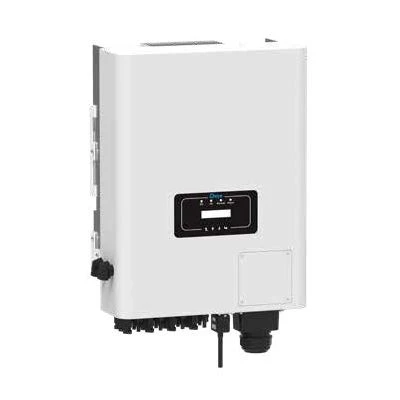
If the voltage is too low, the inverter might not be able to start up or might operate at a reduced efficiency. On the other hand, if the voltage is too high, it can damage the internal components of the inverter. That's why it's essential to choose a string inverter with a suitable voltage tolerance range for your solar panel setup.
Let's take a look at some of the string inverters we offer. Our Three Phase String Inverter is a great option for larger solar power systems. It has a wide voltage tolerance range and advanced MPPT technology to handle voltage fluctuations effectively. Whether you're powering a commercial building or a large residential property, this inverter can ensure stable and efficient power conversion.
Then there's our Sunny Island 6KW Inverter. This inverter is known for its reliability and performance. It can handle a variety of voltage conditions and is designed to work well in both off-grid and grid-tied systems. With its intelligent MPPT, it can quickly respond to voltage changes and maximize the power output from your solar panels.
Our Solar Inverter SUNAL is another excellent choice. It's a compact and efficient inverter that's perfect for small to medium-sized solar installations. It has a user-friendly interface and advanced protection features to safeguard against overvoltage and undervoltage situations.
In addition to MPPT and voltage tolerance, string inverters also have built-in protection mechanisms to deal with voltage fluctuations. These protection features include overvoltage protection, undervoltage protection, and short-circuit protection. When the voltage exceeds the safe limits, the overvoltage protection will kick in and shut down the inverter to prevent damage. Similarly, the undervoltage protection will activate if the voltage drops too low, ensuring the inverter doesn't operate under unfavorable conditions.
Short-circuit protection is also crucial. If there's a short circuit in the system, it can cause a sudden spike in current and voltage. The inverter's short-circuit protection will detect this and quickly cut off the power to prevent any damage to the inverter or other components in the system.
Now, you might be wondering how to choose the right string inverter to handle voltage fluctuations for your specific needs. Here are a few tips. First, consider the voltage output of your solar panels. Make sure the inverter you choose has a voltage tolerance range that can accommodate the maximum and minimum voltages your panels are likely to produce.
Second, look at the MPPT efficiency of the inverter. A higher MPPT efficiency means the inverter can track the maximum power point more accurately and extract more power from the solar panels, even under fluctuating voltage conditions.
Finally, check the protection features of the inverter. Make sure it has reliable overvoltage, undervoltage, and short-circuit protection to keep your system safe.
In conclusion, handling voltage fluctuations is a critical function of string inverters. With advanced MPPT technology, suitable voltage tolerance ranges, and built-in protection mechanisms, string inverters can ensure stable and efficient power conversion in solar power systems. Whether you're a homeowner looking to install a small solar setup or a business owner planning a large-scale solar project, choosing the right string inverter is essential.
If you're interested in learning more about our string inverters or have any questions about how they handle voltage fluctuations, feel free to get in touch with us. We're here to help you find the perfect solution for your solar power needs. Let's work together to make your solar energy system as efficient and reliable as possible.
References
- "Solar Inverter Handbook" - A comprehensive guide on solar inverters and their operation.
- Industry research reports on solar power systems and the performance of string inverters.


