


As a supplier of Three Phase String Inverters, I've witnessed firsthand the critical importance of ensuring that the output frequency of these inverters matches the grid frequency. This alignment is not just a technicality; it's the linchpin that enables seamless integration of solar power systems into the existing electrical grid. In this blog, I'll delve into the intricacies of how the output frequency of a three - phase string inverter is made to match the grid frequency, offering insights that are both scientifically sound and practically relevant.
Understanding the Basics: Grid Frequency and Inverter Output Frequency
Before we dive into the matching process, it's essential to understand what grid frequency and inverter output frequency are. Grid frequency is the frequency at which alternating current (AC) is transmitted in an electrical grid. In most parts of the world, the standard grid frequency is either 50 Hz or 60 Hz. This frequency is maintained within a very narrow tolerance to ensure the stable operation of electrical appliances and the overall grid infrastructure.
On the other hand, a three - phase string inverter converts the direct current (DC) generated by solar panels into AC. The output frequency of the inverter must be precisely controlled to match the grid frequency. If there is a significant mismatch, it can lead to a range of problems, from inefficient power transfer to potential damage to the inverter and other connected equipment.
The Role of Control Systems in Frequency Matching
Modern three - phase string inverters are equipped with sophisticated control systems that play a central role in matching the output frequency to the grid frequency. These control systems use a combination of hardware and software components to monitor and adjust the inverter's output.
One of the key components in this process is the phase - locked loop (PLL). A PLL is an electronic circuit that generates an output signal whose phase is related to the phase of an input signal. In the context of a three - phase string inverter, the PLL continuously monitors the grid frequency and adjusts the inverter's output frequency accordingly. It compares the phase and frequency of the grid voltage with the inverter's output voltage and makes real - time adjustments to minimize any differences.
The control system also takes into account other factors such as the power flow and the stability of the grid. For example, if there is a sudden change in the grid load, the inverter's control system can adjust the output frequency and power to maintain a stable connection.
Synchronization Techniques
Synchronization is a crucial step in ensuring that the inverter's output frequency matches the grid frequency. There are several synchronization techniques used in three - phase string inverters.
One common technique is the open - loop synchronization. In open - loop synchronization, the inverter is programmed to generate an output frequency that is close to the expected grid frequency. This method is relatively simple and cost - effective but may not provide the high level of accuracy required in all situations.
A more accurate method is the closed - loop synchronization. In closed - loop synchronization, the inverter continuously monitors the grid frequency and adjusts its output frequency based on the feedback received. This technique uses sensors to measure the grid voltage and current and then uses the control system to make the necessary adjustments. Closed - loop synchronization is more complex and expensive but offers a higher level of accuracy and stability.
Impact of Mismatched Frequencies
When the output frequency of a three - phase string inverter does not match the grid frequency, it can have several negative consequences.
One of the most immediate effects is a reduction in power transfer efficiency. If the frequencies are not in sync, the power flow between the inverter and the grid can be disrupted, leading to losses in the form of heat and reduced overall power output.
Mismatched frequencies can also cause mechanical stress on electrical equipment. Motors and other rotating machinery are designed to operate at a specific frequency. When the frequency deviates from the standard, these machines can experience increased wear and tear, leading to premature failure.
In addition, a significant frequency mismatch can trigger protective relays in the grid. These relays are designed to isolate the inverter from the grid to prevent damage to the grid infrastructure. This can result in the inverter being taken offline, interrupting the power supply from the solar power system.
Our Three Phase String Inverters: Ensuring Frequency Match
At our company, we take great pride in the quality and performance of our Three Phase String Inverter. Our inverters are designed with the latest technology and control systems to ensure a precise match between the output frequency and the grid frequency.
We use advanced PLL technology in our inverters to provide accurate and stable frequency control. Our control systems are continuously updated to adapt to changes in the grid conditions and to improve the overall performance of the inverter.
In addition, our inverters undergo rigorous testing before they are released to the market. We test the frequency matching capabilities under a variety of grid conditions to ensure that our inverters can operate reliably in different environments.
Examples of Our Products
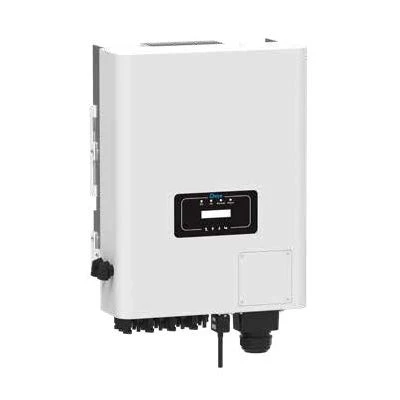
We offer a range of three - phase string inverters, each designed to meet the specific needs of our customers. Two of our popular products are the Sunny Island 6KW Inverter and the Solar Inverter SUNAL.
The Sunny Island 6KW Inverter is a high - performance inverter that is suitable for both residential and commercial solar power systems. It features advanced frequency control technology and can operate efficiently in a wide range of grid frequencies.
The Solar Inverter SUNAL is another excellent option for customers looking for a reliable and cost - effective three - phase string inverter. It offers a high level of efficiency and is designed to be easy to install and maintain.

Conclusion
Matching the output frequency of a three - phase string inverter to the grid frequency is a complex but essential process. With the right control systems, synchronization techniques, and quality products, it is possible to ensure a seamless integration of solar power systems into the grid.
At our company, we are committed to providing our customers with the best - in - class three - phase string inverters that offer precise frequency matching and reliable performance. If you are interested in learning more about our products or have any questions about frequency matching, we encourage you to contact us for a procurement discussion. Our team of experts is ready to assist you in finding the right solution for your solar power needs.
References
- Bose, B. K. (2002). Power Electronics and Motor Drives: Advances and Trends. Academic Press.
- Mohan, N., Undeland, T. M., & Robbins, W. P. (2012). Power Electronics: Converters, Applications, and Design. John Wiley & Sons.
- Erickson, R. W., & Maksimović, D. (2001). Fundamentals of Power Electronics. Springer Science & Business Media.


