


As a supplier of rack-mounted batteries, I often get asked about the maximum discharging current of these batteries. It's a crucial question, especially for those who rely on these batteries for various applications, from small-scale telecom equipment to large-scale energy storage systems. In this blog post, I'll break down what the maximum discharging current is, what factors affect it, and how it impacts your choice of rack-mounted battery.
What is the Maximum Discharging Current?
The maximum discharging current refers to the highest amount of current that a battery can safely deliver over a specified period without causing damage to the battery or compromising its performance. It's usually measured in amperes (A). For example, if a battery has a maximum discharging current of 100A, it means that under normal operating conditions, it can provide up to 100A of current at a time.
Understanding the maximum discharging current is essential because it determines the battery's ability to power high-demand devices. If you try to draw more current from a battery than its maximum discharging current rating, it can lead to overheating, reduced battery life, and even safety hazards.
Factors Affecting the Maximum Discharging Current
Several factors can influence the maximum discharging current of a rack-mounted battery. Let's take a closer look at some of the most important ones:
Battery Chemistry
Different battery chemistries have different capabilities when it comes to discharging current. For instance, lithium iron phosphate (LiFePO4) batteries, which are commonly used in rack-mounted applications, generally have a higher maximum discharging current compared to lead-acid batteries. LiFePO4 batteries are known for their high power density and excellent thermal stability, allowing them to deliver high currents without significant degradation.
Battery Capacity
The capacity of a battery, measured in ampere-hours (Ah), also plays a role in determining the maximum discharging current. Generally, larger capacity batteries can handle higher discharging currents. For example, a 51.2V 100Ah Rack-mounted Battery may have a different maximum discharging current compared to a 51.2V 200Ah battery. A higher capacity battery has more energy stored, which can be released at a higher rate if needed.
Temperature
Temperature has a significant impact on a battery's performance, including its maximum discharging current. Batteries tend to perform better at moderate temperatures. At low temperatures, the chemical reactions inside the battery slow down, reducing its ability to deliver high currents. On the other hand, high temperatures can cause the battery to overheat, which can damage the battery and reduce its lifespan. Most rack-mounted batteries are designed to operate within a specific temperature range, and the maximum discharging current may be derated outside of this range.
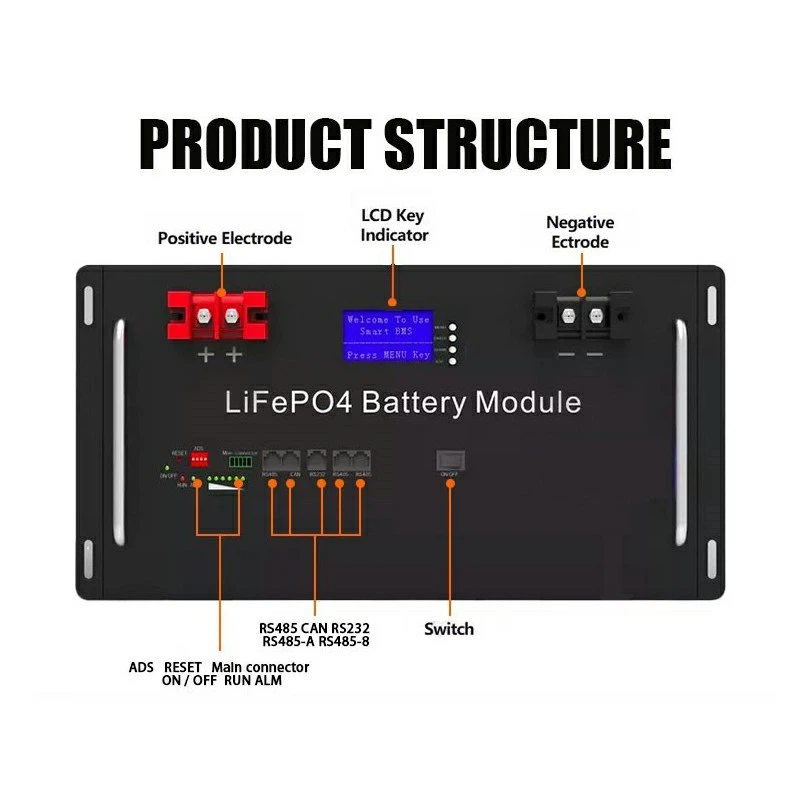

Battery Design and Construction
The design and construction of the battery also affect its maximum discharging current. Batteries with better internal connections, thicker electrodes, and more efficient cooling systems can generally handle higher currents. For example, a High Voltage Energy Storage Tank for 51.2V200Ah Battery may be designed with advanced features to optimize its performance and increase its maximum discharging current.
Why the Maximum Discharging Current Matters
The maximum discharging current is a critical factor to consider when choosing a rack-mounted battery for your application. Here are some reasons why:
Compatibility with Devices
If you're using the battery to power high-demand devices, such as servers, telecom equipment, or electric vehicles, you need to ensure that the battery can provide enough current. For example, a SUN-48V100Ah LiFePO4 Battery for Telecom Equipment needs to be able to deliver the required current to keep the telecom equipment running smoothly. Choosing a battery with a maximum discharging current that is too low can result in device malfunctions or reduced performance.
System Efficiency
Using a battery with an appropriate maximum discharging current can improve the overall efficiency of your system. When a battery is operating within its recommended current range, it can deliver power more efficiently, reducing energy losses and saving you money in the long run.
Battery Lifespan
Drawing excessive current from a battery can significantly reduce its lifespan. By choosing a battery with a maximum discharging current that matches your application's requirements, you can ensure that the battery operates under optimal conditions, which can extend its lifespan and reduce the need for frequent replacements.
How to Determine the Right Maximum Discharging Current for Your Application
To determine the right maximum discharging current for your application, you need to consider the following steps:
Identify Your Load Requirements
First, you need to determine the current requirements of the devices or systems that you'll be powering with the battery. Look at the device specifications or consult the manufacturer to find out the maximum current draw. Make sure to account for any peak loads or sudden surges in current that may occur.
Consider the Duty Cycle
The duty cycle refers to the pattern of how the battery will be used. If your application requires continuous high-current draw, you'll need a battery with a higher maximum discharging current. On the other hand, if the load is intermittent or has a low duty cycle, you may be able to get away with a battery with a lower maximum discharging current.
Factor in Safety Margins
It's always a good idea to leave some safety margins when choosing a battery. This means selecting a battery with a maximum discharging current that is higher than your calculated load requirements. A safety margin of 20-30% is often recommended to account for any unexpected changes in load or operating conditions.
Conclusion
In conclusion, the maximum discharging current is a crucial parameter to consider when choosing a rack-mounted battery. It determines the battery's ability to power high-demand devices, affects the system's efficiency, and impacts the battery's lifespan. By understanding the factors that influence the maximum discharging current and following the steps to determine the right current for your application, you can make an informed decision and choose the best battery for your needs.
If you're in the market for a rack-mounted battery and have questions about the maximum discharging current or any other aspect of our products, don't hesitate to reach out. We're here to help you find the perfect battery solution for your application. Contact us today to start a conversation about your requirements and let's work together to find the best fit.
References
- Battery University. (n.d.). Understanding Lithium-ion Batteries. Retrieved from [Battery University Website]
- Electrochemical Society. (n.d.). Battery Technology and Applications. Retrieved from [Electrochemical Society Website]


