


Testing the performance of a rack-mounted battery is a crucial step in ensuring its reliability, efficiency, and safety, especially when you're a supplier like me. As a provider of high-quality rack-mounted batteries, I understand the significance of accurate performance testing. In this blog, I'll share some key methods and considerations for testing the performance of rack-mounted batteries.
1. Capacity Testing
Capacity is one of the most fundamental performance indicators of a battery. It represents the amount of charge a battery can store and deliver under specific conditions. To test the capacity of a rack-mounted battery, we typically use a constant current discharge test.
- Equipment Setup: First, connect the rack-mounted battery to a battery tester capable of providing a stable and adjustable discharge current. Make sure all connections are secure to prevent any electrical issues during the test. For example, if we are testing a 48V100Ah Rack Mounted Battery - RP, we need to set up the tester to handle the appropriate voltage and current levels.
- Discharge Process: Set the discharge current to a predefined value, usually based on the battery's rated capacity. For instance, for a 100Ah battery, a common discharge current might be 10A (C/10 rate). Start the discharge process and monitor the battery voltage and temperature continuously. As the battery discharges, its voltage will gradually decrease.
- End Point Determination: The discharge process continues until the battery voltage reaches the predefined cut - off voltage. For a lithium - iron - phosphate (LiFePO4) battery, the typical cut - off voltage is around 2.5V per cell. Once the cut - off voltage is reached, stop the discharge and record the total discharge time.
- Capacity Calculation: Calculate the actual capacity of the battery by multiplying the discharge current by the discharge time. Compare the calculated capacity with the battery's rated capacity. If the actual capacity is significantly lower than the rated capacity, it may indicate a problem with the battery, such as aging or internal damage.
2. Voltage Testing
Voltage is another important parameter to measure the performance of a rack - mounted battery. It reflects the battery's state of charge and its ability to supply power.
- Open - Circuit Voltage (OCV): Measure the open - circuit voltage of the battery when it is not connected to any load. This gives an initial indication of the battery's state of charge. For a fully charged Embedded Energy Storage Lithium Battery, the OCV should be close to its rated voltage. For example, a 48V LiFePO4 battery should have an OCV of around 53 - 54V when fully charged.
- Load Voltage: Measure the battery voltage under load conditions. Connect a load to the battery and measure the voltage across the battery terminals. A significant drop in voltage under load may indicate high internal resistance or a weak battery. Monitor the load voltage over time to detect any abnormal voltage fluctuations.
3. Internal Resistance Testing
Internal resistance is a critical factor that affects the battery's performance, especially its ability to deliver high - current pulses. A high internal resistance can lead to increased power losses and reduced efficiency.
- AC Impedance Method: One common method to measure the internal resistance of a rack - mounted battery is the AC impedance method. This method involves applying a small AC signal to the battery and measuring the resulting voltage and current. By analyzing the phase relationship between the voltage and current, the internal resistance can be calculated.
- DC Pulse Method: Another approach is the DC pulse method. Apply a short - duration high - current pulse to the battery and measure the voltage change across the battery terminals. The internal resistance can be estimated by dividing the voltage change by the current pulse amplitude.
4. Temperature Testing
Temperature has a significant impact on the performance and lifespan of a rack - mounted battery. High temperatures can accelerate the aging process and reduce the battery's capacity, while low temperatures can increase the internal resistance and limit the battery's power output.

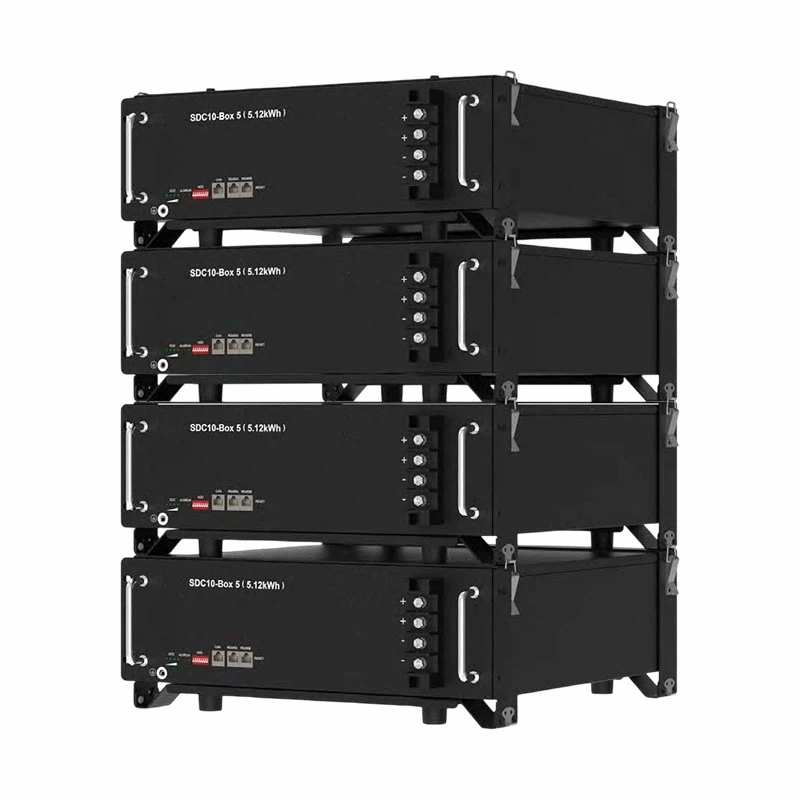
- Thermal Sensors: Install thermal sensors at different locations on the battery rack to monitor the temperature distribution. This helps to identify any hot spots or areas with abnormal temperature rise. For example, in a High Voltage Energy Storage Tank for 51.2V200Ah Battery, proper temperature monitoring is crucial to ensure its safe and efficient operation.
- Temperature Cycling Tests: Conduct temperature cycling tests to simulate real - world operating conditions. Subject the battery to a series of temperature cycles, ranging from low to high temperatures, and monitor its performance at each temperature point. This helps to evaluate the battery's thermal stability and its ability to withstand temperature variations.
5. Cycle Life Testing
Cycle life is an important performance metric that indicates how many charge - discharge cycles a battery can endure before its capacity drops below a certain threshold.
- Charge - Discharge Cycles: Set up a test system to perform a series of charge - discharge cycles on the rack - mounted battery. Define the charge and discharge parameters, such as the charge current, discharge current, and cut - off voltages. Monitor the battery's capacity and other performance parameters after each cycle.
- End of Life Criteria: Determine the end - of - life criteria based on the battery's application requirements. For example, if the battery is used in a critical energy storage system, the end - of - life may be defined as when the battery's capacity drops to 80% of its original capacity.
Considerations during Testing
- Safety First: Always follow strict safety procedures during battery testing. Wear appropriate personal protective equipment (PPE) and ensure that the testing environment is well - ventilated. Batteries can release flammable gases during charging and discharging, so it's important to prevent any potential fire or explosion hazards.
- Test Environment: Control the test environment conditions, such as temperature and humidity, to ensure consistent and accurate test results. Fluctuations in environmental conditions can affect the battery's performance and lead to inaccurate test data.
- Data Recording and Analysis: Keep detailed records of all test data, including voltage, current, temperature, and capacity. Use data analysis software to analyze the data and identify any trends or anomalies. This helps to make informed decisions about the battery's performance and potential issues.
Conclusion
Testing the performance of a rack - mounted battery is a comprehensive process that involves multiple aspects, including capacity, voltage, internal resistance, temperature, and cycle life. By conducting thorough and accurate tests, we can ensure that our rack - mounted batteries meet the highest quality standards and provide reliable performance in various applications.
If you're interested in our rack - mounted batteries or have any questions about battery performance testing, we'd love to hear from you. Contact us to start a discussion about your specific requirements and explore how our products can meet your needs.
References
- Linden, D., & Reddy, T. B. (2002). Handbook of Batteries. McGraw - Hill.
- Chen, Z., Cong, T. N., Yang, J., Tan, C., & Li, Y. (2018). Recent Progress in High - Energy Lithium - Ion Batteries. Chemical Reviews, 118(23), 11339 - 11384.


