


Yo, what's up everyone! As a supplier of Rackmount LiFePO4 Batteries, I often get asked about the internal resistance of these bad boys. So, I thought I'd break it down for you in this blog post.
Let's start with the basics. Internal resistance is a crucial factor when it comes to batteries. It's like the hidden hurdle that affects how well a battery can perform. In simple terms, internal resistance is the opposition to the flow of electric current within the battery itself. When current flows through a battery, it encounters this resistance, which causes a voltage drop and generates heat.
Now, why does internal resistance matter for our Rackmount LiFePO4 Batteries? Well, it has a direct impact on several important aspects of battery performance. First off, it affects the battery's efficiency. A higher internal resistance means more energy is wasted as heat during charging and discharging. This not only reduces the overall efficiency of the battery but also leads to increased operating costs in the long run.
Secondly, internal resistance influences the battery's ability to deliver high currents. When you need a large amount of power quickly, a battery with low internal resistance can supply the current more effectively. On the other hand, a battery with high internal resistance may struggle to meet the demand, resulting in a drop in voltage and reduced performance.
For example, let's say you're using our High Voltage Energy Storage Tank for 51.2V200Ah Battery in a high - power application. If the internal resistance is too high, the battery might not be able to provide the necessary power to keep your equipment running smoothly.
So, what causes internal resistance in Rackmount LiFePO4 Batteries? There are several factors at play. One of the main factors is the design and construction of the battery. The materials used in the electrodes, the electrolyte, and the separator all contribute to the internal resistance. For instance, if the electrodes have poor conductivity, it will increase the resistance.
Another factor is the state of charge (SOC) and state of health (SOH) of the battery. As the battery ages or its SOC changes, the internal resistance can also vary. Generally, as the battery gets older or is deeply discharged, the internal resistance tends to increase.
Temperature also has a significant impact on internal resistance. At low temperatures, the electrolyte becomes more viscous, which increases the resistance. Conversely, at high temperatures, the chemical reactions inside the battery speed up, but excessive heat can also damage the battery components and increase the resistance over time.
Now, how do we measure the internal resistance of our Rackmount LiFePO4 Batteries? There are a few methods. One common method is the DC current interruption method. In this method, a short - duration current pulse is applied to the battery, and the voltage change is measured before and after the pulse. By using Ohm's law (V = IR), we can calculate the internal resistance.
Another method is the AC impedance spectroscopy. This method involves applying a small AC signal to the battery and measuring the impedance at different frequencies. It provides more detailed information about the battery's internal resistance and can help identify different electrochemical processes occurring inside the battery.
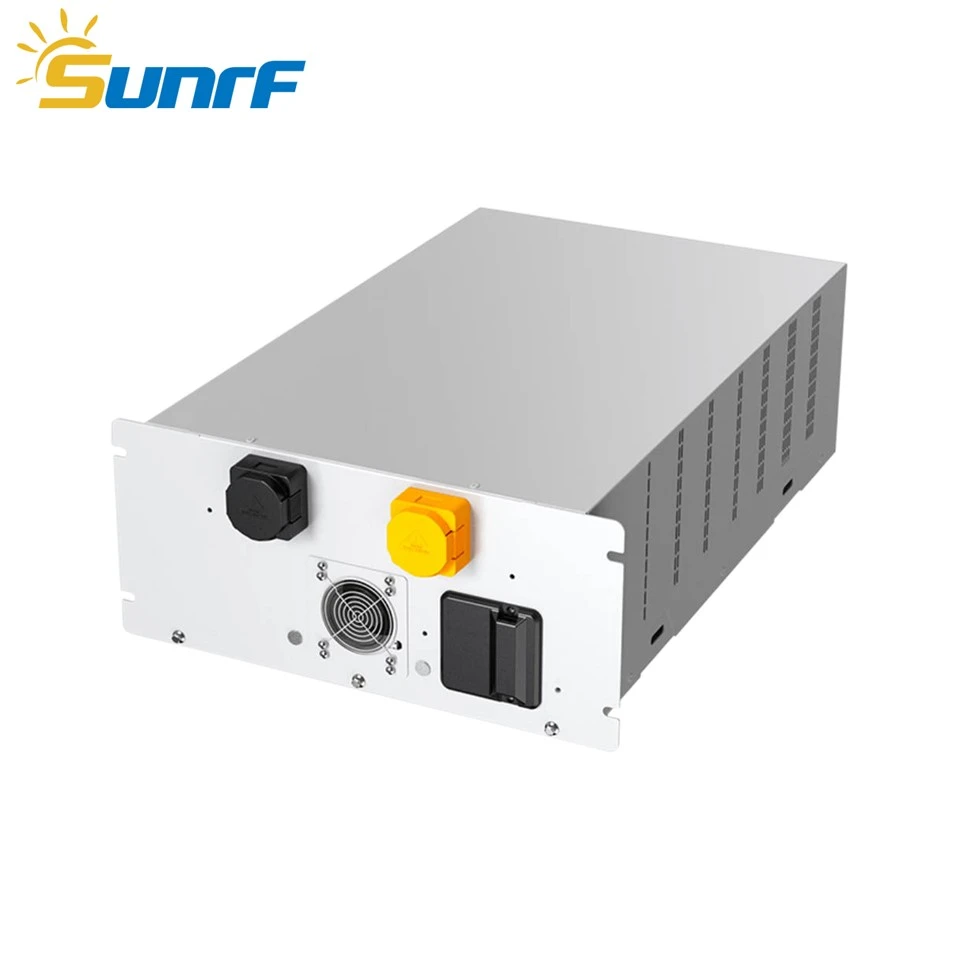

As a supplier, we take great care to minimize the internal resistance of our Rackmount LiFePO4 Batteries. We use high - quality materials in the manufacturing process to ensure good conductivity. Our advanced manufacturing techniques also help in optimizing the battery design to reduce resistance.
For example, our 48V100Ah LiFePO4 Battery Rack - mounted Battery Suitable for 19 "rack for Telecom Equipment is designed with low - resistance components to ensure high - efficiency performance. The electrodes are made of high - purity materials, and the electrolyte is carefully formulated to provide good ion conductivity.
Similarly, our LiFePO4 Battery Pack 16S280AH Air - cooling is engineered to have a low internal resistance. The air - cooling system helps in maintaining an optimal temperature, which also helps in keeping the resistance in check.
If you're in the market for Rackmount LiFePO4 Batteries, it's important to consider the internal resistance. A battery with low internal resistance will offer better performance, higher efficiency, and longer lifespan. Whether you're using it for telecom equipment, energy storage systems, or other applications, choosing a battery with the right internal resistance can make a big difference.
If you have any questions about the internal resistance of our Rackmount LiFePO4 Batteries or want to learn more about our products, don't hesitate to reach out. We're here to help you find the perfect battery solution for your needs. Whether you're a small - scale user or a large - scale enterprise, we can provide you with the best products and support. Let's have a chat about your requirements and see how we can work together to get you the most suitable Rackmount LiFePO4 Batteries.
References:
- Battery Technology Handbook
- Journal of Power Sources


