


In the realm of renewable energy, solar hybrid inverters play a pivotal role in integrating solar power systems with the utility grid. As a leading supplier of solar hybrid inverters, we understand the intricacies of how these devices synchronize with the grid, ensuring a seamless and efficient flow of electricity. In this blog post, we will delve into the technical aspects of solar hybrid inverter grid synchronization, exploring the principles, components, and processes involved.
Understanding the Basics of Solar Hybrid Inverters
Before we discuss grid synchronization, let's first clarify what a solar hybrid inverter is. A solar hybrid inverter is a sophisticated device that converts direct current (DC) electricity generated by solar panels into alternating current (AC) electricity, which is used in most household and industrial applications. What sets hybrid inverters apart from traditional inverters is their ability to manage multiple power sources, including solar panels, batteries, and the grid.
Hybrid inverters can operate in different modes, such as off-grid, on-grid, and hybrid modes. In off-grid mode, the inverter powers the load directly from the solar panels and batteries, independent of the grid. On-grid mode allows the inverter to feed excess solar power back into the grid, while also drawing power from the grid when solar generation is insufficient. Hybrid mode combines the features of off-grid and on-grid modes, enabling the inverter to switch between the two based on the availability of solar power, battery charge level, and grid conditions.
The Importance of Grid Synchronization
Grid synchronization is a critical function of solar hybrid inverters, especially when operating in on-grid or hybrid modes. When an inverter is connected to the grid, it must match the voltage, frequency, and phase of the grid to ensure a stable and safe exchange of electricity. Failure to synchronize properly can lead to power quality issues, such as voltage fluctuations, frequency deviations, and harmonics, which can damage electrical equipment and disrupt the normal operation of the grid.
In addition to power quality, grid synchronization is also essential for grid stability and reliability. Solar power is intermittent by nature, as it depends on sunlight availability. By synchronizing with the grid, solar hybrid inverters can balance the supply and demand of electricity, helping to maintain a stable grid frequency and voltage. This is particularly important in regions with a high penetration of solar power, where the variability of solar generation can pose challenges to grid stability.
How Solar Hybrid Inverters Synchronize with the Grid
The process of grid synchronization involves several steps and components, which work together to ensure that the inverter output matches the grid parameters. Let's take a closer look at each of these steps:
1. Grid Monitoring
The first step in grid synchronization is to monitor the grid voltage, frequency, and phase. This is typically done using sensors and control circuits within the inverter. The sensors continuously measure the grid parameters and send the data to the inverter's control system.

The control system analyzes the grid data and compares it with the inverter's internal reference values. If the grid parameters are within the acceptable range, the inverter proceeds to the next step. If not, the inverter may wait until the grid conditions improve or take appropriate measures to protect itself and the grid.
2. Phase Locking
Once the grid parameters are within the acceptable range, the inverter needs to lock its output phase to the grid phase. This is known as phase locking, and it is crucial for ensuring that the inverter output is in sync with the grid.
Phase locking is achieved using a phase-locked loop (PLL) circuit, which is a feedback control system that adjusts the inverter output frequency and phase to match the grid frequency and phase. The PLL circuit compares the inverter output phase with the grid phase and generates an error signal. This error signal is then used to adjust the inverter's internal oscillator, which controls the output frequency and phase.
3. Voltage and Frequency Matching
In addition to phase locking, the inverter also needs to match its output voltage and frequency to the grid voltage and frequency. This is done using a voltage regulator and a frequency controller, which are part of the inverter's control system.
The voltage regulator adjusts the inverter output voltage to match the grid voltage. It monitors the grid voltage and compares it with the inverter output voltage. If the output voltage is too high or too low, the voltage regulator adjusts the inverter's power electronics to increase or decrease the output voltage accordingly.
The frequency controller adjusts the inverter output frequency to match the grid frequency. It monitors the grid frequency and compares it with the inverter output frequency. If the output frequency is too high or too low, the frequency controller adjusts the inverter's internal oscillator to increase or decrease the output frequency accordingly.
4. Connection to the Grid
Once the inverter output voltage, frequency, and phase are synchronized with the grid, the inverter can be connected to the grid. This is typically done using a contactor or a circuit breaker, which is controlled by the inverter's control system.
Before connecting to the grid, the inverter performs a final check to ensure that the grid conditions are still within the acceptable range. If everything is okay, the contactor or circuit breaker is closed, and the inverter starts feeding power into the grid.
Components of a Solar Hybrid Inverter for Grid Synchronization
Several components within a solar hybrid inverter are essential for grid synchronization. Let's take a look at some of these components:
1. Sensors
Sensors are used to measure the grid voltage, frequency, and phase, as well as the inverter output voltage, current, and power. These sensors provide the necessary data for the inverter's control system to monitor and adjust the inverter output.
2. Control System
The control system is the brain of the inverter, responsible for monitoring the grid conditions, controlling the inverter output, and ensuring grid synchronization. It consists of a microcontroller or a digital signal processor (DSP), which executes the control algorithms and communicates with the other components of the inverter.
3. Power Electronics
The power electronics section of the inverter is responsible for converting the DC electricity from the solar panels and batteries into AC electricity. It consists of a DC-DC converter, an inverter bridge, and a filter. The DC-DC converter adjusts the DC voltage from the solar panels and batteries to a suitable level for the inverter bridge. The inverter bridge converts the DC voltage into AC voltage, and the filter smooths out the AC voltage to reduce harmonics.
4. Phase-Locked Loop (PLL) Circuit
The PLL circuit is a key component for phase locking. It ensures that the inverter output phase is in sync with the grid phase, which is essential for grid synchronization.
5. Contactor or Circuit Breaker
The contactor or circuit breaker is used to connect and disconnect the inverter from the grid. It is controlled by the inverter's control system and ensures that the inverter is only connected to the grid when the grid conditions are safe and stable.
Our Solar Hybrid Inverters for Grid Synchronization
As a leading supplier of solar hybrid inverters, we offer a wide range of products that are designed to synchronize with the grid efficiently and reliably. Our inverters are equipped with advanced sensors, control systems, and power electronics, which ensure accurate grid monitoring, precise phase locking, and stable voltage and frequency matching.
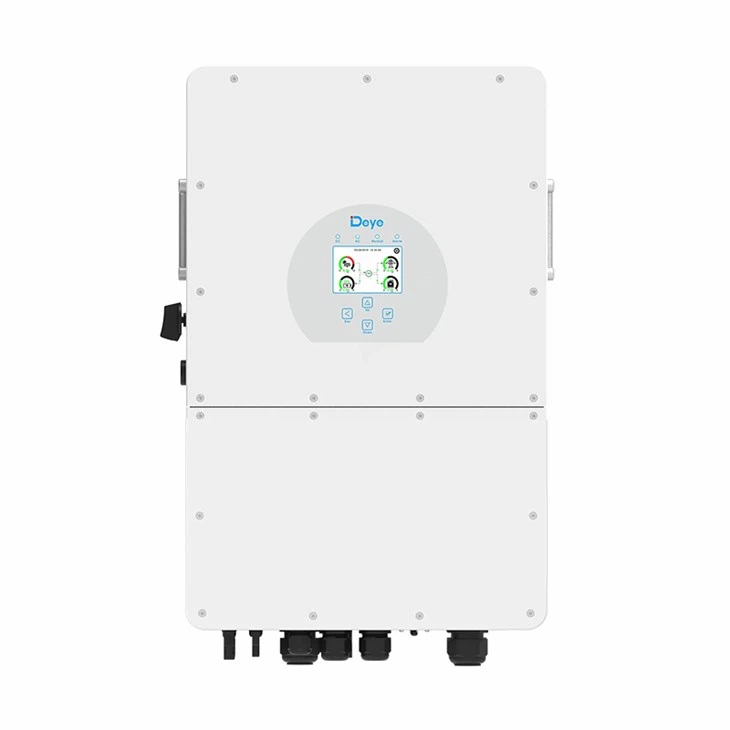
One of our popular products is the SUN-KTL 60 -110KW Smart Hybrid Inverter for Home Energy System. This inverter is suitable for residential and small commercial applications, offering high efficiency, reliability, and flexibility. It can operate in off-grid, on-grid, and hybrid modes, and it is designed to synchronize with the grid seamlessly.
Another product in our portfolio is the 30-50kw Three Phase Hybrid Inverter. This inverter is ideal for medium to large-scale commercial and industrial applications. It features a three-phase design, high power output, and advanced grid synchronization capabilities.
We also offer a range of Three Phase Hybrid Inverters that are suitable for different grid conditions and power requirements. These inverters are designed to provide reliable and efficient grid synchronization, ensuring a stable and safe exchange of electricity between the solar power system and the grid.
Conclusion
Grid synchronization is a critical function of solar hybrid inverters, enabling them to integrate solar power systems with the utility grid efficiently and reliably. By understanding the principles, components, and processes involved in grid synchronization, we can design and manufacture high-quality inverters that meet the needs of our customers.
As a leading supplier of solar hybrid inverters, we are committed to providing our customers with the best products and solutions for grid synchronization. Our inverters are designed to be easy to install, operate, and maintain, and they offer high efficiency, reliability, and flexibility.
If you are interested in learning more about our solar hybrid inverters or would like to discuss your specific requirements, please feel free to contact us. We look forward to working with you to achieve your renewable energy goals.
References
- "Solar Inverter Handbook" by SMA Solar Technology AG
- "Grid-Connected Photovoltaic Power Systems: Design and Installation" by Paul Gipe
- "Power Electronics: Converters, Applications, and Design" by Ned Mohan, Tore M. Undeland, and William P. Robbins


