


As a seasoned stacked battery supplier, I've witnessed firsthand the critical role that appropriate charge and discharge cut - off voltages play in the performance and longevity of stacked batteries. In this blog, I'll share insights on how to set these crucial parameters to ensure optimal battery operation.
Understanding Stacked Batteries
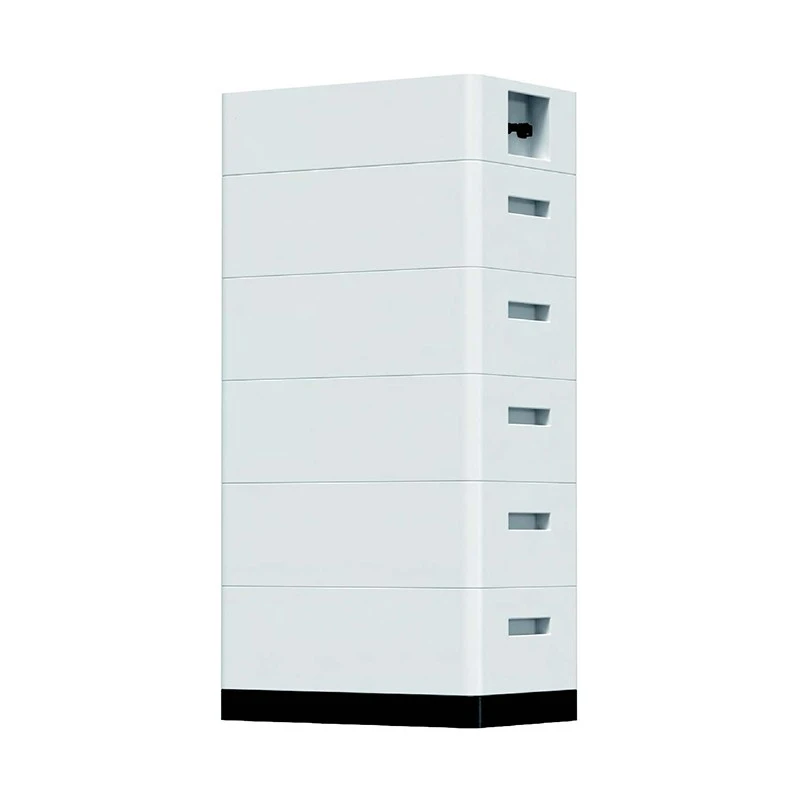
Stacked batteries are a configuration where multiple individual battery cells are connected in series or parallel to achieve higher voltage or capacity. This setup is commonly used in various applications, from Stacked Household Lithium Battery systems to industrial power storage. The advantage of stacking batteries is that it allows us to meet the specific power requirements of different devices and systems. However, it also introduces challenges in terms of voltage management.

Importance of Charge and Discharge Cut - off Voltages
The charge and discharge cut - off voltages are the boundaries within which a battery should operate. Setting these voltages correctly is essential for several reasons. Firstly, overcharging a battery can lead to excessive heat generation, electrolyte decomposition, and even thermal runaway, which can be extremely dangerous. On the other hand, deep discharging a battery can cause irreversible damage to the electrodes, reducing the battery's capacity and lifespan.
Factors Affecting Cut - off Voltage Settings
Battery Chemistry
Different battery chemistries have different optimal voltage ranges. For example, lithium - iron - phosphate (LiFePO4) batteries, which are commonly used in Stacked Household High Voltage Lithium Battery applications, typically have a charge cut - off voltage around 3.6 - 3.65V per cell and a discharge cut - off voltage around 2.5 - 2.7V per cell. In contrast, lithium - cobalt - oxide (LiCoO2) batteries have a higher charge cut - off voltage, usually around 4.2V per cell.
Application Requirements
The intended use of the battery also influences the cut - off voltage settings. For applications that require high power output, such as electric vehicles, a higher charge cut - off voltage may be used to extract more energy from the battery. However, this may come at the cost of reduced battery lifespan. For stationary energy storage systems, where longevity is often a priority, more conservative cut - off voltages may be preferred.
Temperature
Temperature has a significant impact on battery performance and voltage. At low temperatures, the battery's internal resistance increases, which can cause the voltage to drop more rapidly during discharge. As a result, the discharge cut - off voltage may need to be adjusted upwards to prevent over - discharging. Conversely, at high temperatures, the battery may be more prone to overcharging, so the charge cut - off voltage may need to be lowered.
Methods for Setting Cut - off Voltages
Manufacturer Recommendations
The first step in setting the cut - off voltages is to refer to the battery manufacturer's specifications. Battery manufacturers conduct extensive testing to determine the optimal voltage ranges for their products. These recommendations are based on factors such as battery chemistry, design, and expected operating conditions. By following the manufacturer's guidelines, you can ensure that the battery operates within a safe and efficient voltage range.
Monitoring and Adjustment
In addition to following the manufacturer's recommendations, it's also important to monitor the battery's voltage during operation. This can be done using a battery management system (BMS). A BMS continuously measures the voltage of each cell in the battery stack and can automatically cut off the charging or discharging process when the voltage reaches the set cut - off values.
It's also possible to make adjustments to the cut - off voltages based on real - time monitoring. For example, if you notice that the battery is frequently reaching the charge cut - off voltage during normal operation, you may need to lower the charge cut - off voltage slightly to prevent overcharging. Similarly, if the battery is being discharged too deeply, you may need to increase the discharge cut - off voltage.
Consideration of Cell Balancing
In a stacked battery system, cell balancing is crucial to ensure that all cells in the stack have the same state of charge. If one or more cells in the stack are overcharged or undercharged, it can lead to uneven stress on the cells and reduce the overall performance and lifespan of the battery. When setting the cut - off voltages, it's important to consider the cell balancing mechanism in the battery management system. Some BMSs use passive balancing, where excess charge is dissipated as heat, while others use active balancing, where charge is transferred from one cell to another.
Case Study: Floor - Mounted Household Lithium Battery
Let's take a look at a real - world example of setting the cut - off voltages for a floor - mounted household lithium battery. This type of battery is often used to store energy from solar panels for use during periods of low sunlight or high electricity demand.
The battery in this case is a LiFePO4 battery stack with a nominal voltage of 48V. Based on the manufacturer's recommendations, the charge cut - off voltage is set at 54.6V (3.64V per cell for a 15 - cell stack), and the discharge cut - off voltage is set at 42V (2.8V per cell).
A BMS is installed in the battery system to monitor the voltage of each cell and ensure that the charging and discharging processes are controlled within the set cut - off voltages. The BMS also performs cell balancing to ensure that all cells in the stack have the same state of charge.
During operation, the BMS continuously monitors the battery's voltage. If the voltage reaches the charge cut - off voltage during charging, the BMS automatically stops the charging process. Similarly, if the voltage drops to the discharge cut - off voltage during discharging, the BMS cuts off the load to prevent over - discharging.
Conclusion
Setting the appropriate charge and discharge cut - off voltages for a stacked battery is a complex but essential task. By considering factors such as battery chemistry, application requirements, temperature, and cell balancing, and by following the manufacturer's recommendations and using a reliable battery management system, you can ensure that your stacked battery operates safely and efficiently.
If you're in the market for high - quality stacked batteries or need more information on setting cut - off voltages, we'd love to hear from you. Our team of experts can provide you with personalized advice and solutions based on your specific needs. Contact us to start a procurement discussion and take your energy storage system to the next level.
References
- Battery Management Systems: Design by Example, by Tushar Goel, Isidor Buchmann, and Thomas N. James.
- Lithium - Ion Batteries: Science and Technologies, edited by Yoshio Masuda, Akihiro Kozawa, and Shinichi Komaba.


