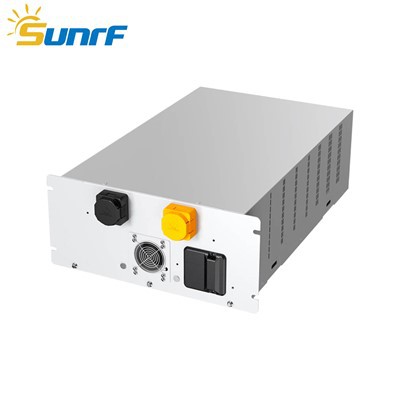
Hey there! As a supplier of Three Phase String Inverter, I often get asked about the power density of these inverters. So, I thought I'd take a moment to break it down for you.
First off, let's talk about what power density actually means. In simple terms, power density is the amount of power that an inverter can produce per unit of volume or weight. It's a crucial metric because it tells you how efficient and compact an inverter is. A higher power density means that you can get more power out of a smaller and lighter device, which is super handy, especially in applications where space and weight are at a premium.
When it comes to three-phase string inverters, power density plays a vital role. These inverters are commonly used in commercial and industrial solar power systems, where they need to convert the DC power generated by solar panels into AC power that can be used in the grid or on-site. With a high power density, a three-phase string inverter can handle a large amount of power in a relatively small package, making it easier to install and integrate into existing systems.
One of the key factors that affect the power density of a three-phase string inverter is the technology used in its design. Modern inverters are leveraging advanced semiconductor materials and topologies to achieve higher efficiency and power density. For example, the use of silicon carbide (SiC) and gallium nitride (GaN) semiconductors can significantly reduce the losses in the inverter, allowing it to operate at higher frequencies and handle more power. These materials also have better thermal properties, which means that the inverter can dissipate heat more effectively, further improving its power density.
Another important aspect is the cooling system. A well-designed cooling system is essential for maintaining the performance and reliability of a three-phase string inverter. Inverters with high power density generate a lot of heat, and if not properly cooled, this heat can cause the components to degrade and fail. Some inverters use passive cooling methods, such as heatsinks, while others employ active cooling techniques, like fans or liquid cooling. The choice of cooling system depends on the specific requirements of the application and the power density of the inverter.


Let's take a look at some of the products we offer as a supplier. Our Sunny Island 6KW Inverter is a great example of a high-power-density three-phase string inverter. With its advanced design and efficient components, it can deliver 6 kilowatts of power in a compact and lightweight package. This makes it ideal for small to medium-sized commercial solar installations, where space is often limited.
Another product in our lineup is the Solar Inverter SUNAL. This inverter is designed for larger commercial and industrial applications, where high power density and reliability are crucial. It can handle a significant amount of power while maintaining a relatively small footprint, making it a cost-effective solution for large-scale solar power projects.
So, why is power density so important for our customers? Well, for one, it can save them money. A high-power-density inverter requires less space and fewer materials, which means lower installation and maintenance costs. It also allows for more flexibility in system design, as you can fit more power into a smaller area. Additionally, a more efficient inverter with high power density can reduce energy losses, resulting in higher overall system efficiency and more electricity generation.
In the competitive world of solar power, having a high-power-density three-phase string inverter can give our customers a significant edge. It enables them to maximize the output of their solar power systems while minimizing the space and resources required. Whether it's a small rooftop installation or a large utility-scale project, our inverters are designed to meet the diverse needs of our customers.
If you're in the market for a three-phase string inverter, I encourage you to consider the power density as one of the key factors in your decision-making process. Look for inverters that use the latest technology and have a proven track record of reliability. And of course, don't hesitate to reach out to us if you have any questions or need more information.
As a supplier, we're committed to providing our customers with the best possible products and services. We work closely with our clients to understand their specific requirements and recommend the most suitable inverters for their projects. Our team of experts is always on hand to offer technical support and guidance throughout the installation and operation process.
If you're interested in learning more about our Three Phase String Inverter products or have any inquiries about power density or other technical aspects, feel free to get in touch. We're here to help you make the right choice for your solar power system. Whether you're a solar installer, a project developer, or an end-user, we're confident that we can provide you with a solution that meets your needs and exceeds your expectations.
In conclusion, power density is a critical characteristic of three-phase string inverters. It affects the size, efficiency, and cost of the inverter, as well as the overall performance of the solar power system. By choosing a high-power-density inverter, you can optimize your system design, reduce costs, and increase energy production. So, if you're looking for a reliable and efficient three-phase string inverter, look no further. Contact us today to start the conversation about your next solar project.
References
- "Power Electronics for Renewable Energy Systems, Transportation and Industrial Applications" by Bimal K. Bose
- "Solar Photovoltaic Systems: Design and Installation" by John Wiles and Paul Dunlop