


Hey there! As a supplier of Three Phase String Inverters, I often get asked about the size and weight of these nifty devices. In this blog, I'll break down everything you need to know about the dimensions and heft of three - phase string inverters, and even give you some insights into our top - selling models.
Let's start with the basics. What exactly is a Three Phase String Inverter? Well, it's a key component in solar power systems, especially those with larger setups. It converts the direct current (DC) produced by solar panels into alternating current (AC) that can be used in your home or business. And the "three - phase" part means it can handle three separate electrical phases, which is great for more efficient power distribution. You can learn more about it Three Phase String Inverter.
Now, onto the size and weight. The size and weight of a three - phase string inverter can vary quite a bit depending on several factors. One of the main factors is the power rating. Generally, the higher the power rating of the inverter, the larger and heavier it will be. This is because higher - power inverters need more components and larger heat sinks to handle the increased electrical load and dissipate heat effectively.
For example, a small - scale three - phase string inverter with a power rating of around 5 - 10 kW might have dimensions of approximately 500mm (width) x 700mm (height) x 200mm (depth). In terms of weight, it could be around 20 - 30 kilograms. These smaller inverters are great for residential or small commercial solar installations where space might be a bit limited.
On the other hand, larger three - phase string inverters with power ratings of 50 kW or more can be significantly bigger. They might have dimensions of 1000mm (width) x 1500mm (height) x 500mm (depth) or even larger. And their weight can easily exceed 100 kilograms. These heavyweights are typically used in large - scale commercial or utility - scale solar projects.
Another factor that affects the size and weight is the technology and design of the inverter. Some manufacturers use more advanced and compact components, which can result in smaller and lighter inverters without sacrificing performance. For instance, our Sunny Island 6KW Inverter is designed with state - of - the - art technology. It has a relatively small footprint and is lightweight compared to some of its competitors in the same power class. This makes it easier to install, especially in tight spaces.
The build quality and materials also play a role. Inverters made with high - quality, durable materials might be a bit heavier, but they also tend to be more reliable and have a longer lifespan. For example, inverters with a solid metal casing are generally more robust and can withstand harsh environmental conditions.
Let's talk about the importance of size and weight in real - world applications. When it comes to installation, a smaller and lighter inverter is often preferred. It's easier to handle and transport, which can save time and labor costs during the installation process. In addition, if you're installing the inverter in a rooftop solar system, a lighter inverter puts less stress on the roof structure.
In terms of maintenance, a more compact inverter can be easier to access and work on. You can reach the components more easily for troubleshooting or replacement. And if you need to move or replace the inverter in the future, a lighter one is definitely more convenient.
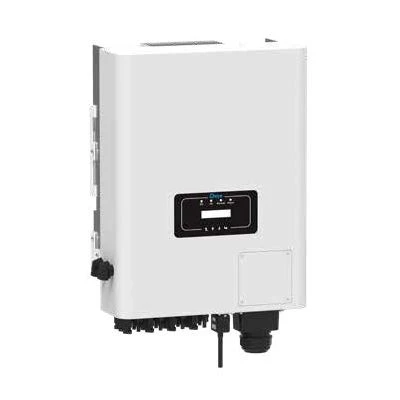

Now, I'd like to introduce another one of our popular products, the Solar Inverter SUNAL. This inverter offers a great balance between size, weight, and performance. It has a medium - power rating that makes it suitable for a wide range of applications, from medium - sized commercial buildings to larger residential homes. The design of the Solar Inverter SUNAL ensures efficient heat dissipation, which helps to keep the inverter running smoothly even under heavy loads.
If you're in the market for a three - phase string inverter, it's important to consider the size and weight based on your specific needs. Think about the available space for installation, the ease of handling, and the overall requirements of your solar power system.
We understand that every customer's situation is unique, and that's why we offer a wide range of three - phase string inverters with different sizes and weights. Whether you need a small, lightweight inverter for a residential project or a large, high - power inverter for a commercial installation, we've got you covered.
If you're interested in learning more about our products or want to discuss your specific requirements, we'd love to hear from you. Contact us to start a conversation about your solar inverter needs. We can provide you with detailed information about the size, weight, and performance of our inverters, and help you choose the best one for your project.
References:
- Industry reports on solar inverter technology and design
- Manufacturer specifications for three - phase string inverters


