In the realm of switch power supplies, soft-switching technology has emerged as a revolutionary concept that significantly enhances efficiency, reduces power losses, and improves overall performance. As a leading switch power supply provider, I am excited to delve into the intricacies of soft-switching technology and explore its implications for modern power supply design.
Understanding the Basics of Switch Power Supplies
Before we dive into soft-switching technology, it's essential to understand the fundamentals of switch power supplies. A switch power supply, also known as a switched-mode power supply (SMPS), is a type of power supply that uses switching regulators to convert electrical power efficiently. Unlike linear power supplies, which dissipate excess energy as heat, switch power supplies operate by rapidly switching the input voltage on and off, allowing for precise control of the output voltage.
The basic components of a switch power supply include an input rectifier, a switching converter, an output filter, and a control circuit. The input rectifier converts the AC input voltage to a DC voltage, which is then fed into the switching converter. The switching converter uses a high-frequency switching device, such as a MOSFET or an IGBT, to rapidly switch the DC voltage on and off. The output filter smooths out the switched voltage to produce a stable DC output voltage. The control circuit monitors the output voltage and adjusts the switching frequency or duty cycle of the switching converter to maintain a constant output voltage.

The Problem with Hard Switching
In traditional switch power supplies, the switching devices operate in a hard-switching mode, where the voltage and current across the switching device change simultaneously during the switching transition. This results in significant power losses due to the overlap of the voltage and current waveforms, known as switching losses. Switching losses can be further exacerbated by the parasitic capacitance and inductance of the switching device and the circuit layout, which can cause ringing and voltage spikes during the switching transition.
In addition to switching losses, hard switching can also generate electromagnetic interference (EMI), which can cause problems for other electronic devices in the vicinity. EMI is caused by the rapid changes in voltage and current during the switching transition, which can radiate electromagnetic energy into the surrounding environment. To mitigate EMI, switch power supplies typically require the use of bulky and expensive EMI filters, which can increase the size, weight, and cost of the power supply.
Introduction to Soft Switching
Soft-switching technology offers a solution to the problems associated with hard switching by reducing switching losses and EMI. Soft switching refers to a technique where the voltage or current across the switching device is zero or near-zero during the switching transition, eliminating the overlap of the voltage and current waveforms and reducing switching losses. There are several different types of soft-switching techniques, including zero-voltage switching (ZVS) and zero-current switching (ZCS).
Zero-Voltage Switching (ZVS)
Zero-voltage switching (ZVS) is a soft-switching technique where the voltage across the switching device is zero or near-zero during the turn-on transition. This is achieved by using a resonant circuit to charge and discharge the parasitic capacitance of the switching device before the turn-on transition. When the voltage across the switching device reaches zero, the switching device can be turned on without any voltage stress, eliminating switching losses.
Zero-Current Switching (ZCS)
Zero-current switching (ZCS) is a soft-switching technique where the current through the switching device is zero or near-zero during the turn-off transition. This is achieved by using a resonant circuit to transfer the current from the switching device to a resonant inductor before the turn-off transition. When the current through the switching device reaches zero, the switching device can be turned off without any current stress, eliminating switching losses.
Benefits of Soft Switching
Soft-switching technology offers several benefits over hard switching, including:
- Reduced Switching Losses: By eliminating the overlap of the voltage and current waveforms during the switching transition, soft switching reduces switching losses and improves the efficiency of the switch power supply. This can result in significant energy savings, especially in high-power applications.
- Lower EMI: Soft switching reduces the rapid changes in voltage and current during the switching transition, which reduces the generation of electromagnetic interference (EMI). This can eliminate the need for bulky and expensive EMI filters, reducing the size, weight, and cost of the power supply.
- Higher Switching Frequencies: Soft switching allows for higher switching frequencies, which can reduce the size and weight of the passive components in the switch power supply, such as the inductors and capacitors. This can result in a more compact and lightweight power supply design.
- Improved Reliability: By reducing the stress on the switching devices, soft switching can improve the reliability and lifespan of the switch power supply. This can reduce the maintenance and replacement costs of the power supply over its lifetime.
Applications of Soft Switching
Soft-switching technology is widely used in a variety of applications, including:
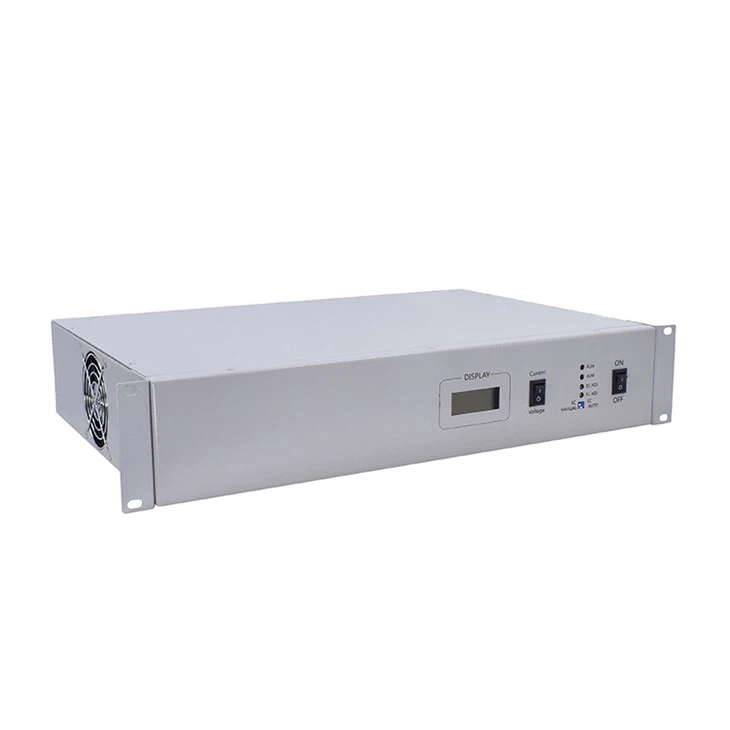
- Telecommunications: Soft-switching technology is used in 6KW Communication Power Supply to improve the efficiency and reliability of the power supply. In telecommunications applications, power supplies are required to operate continuously for long periods of time, and any energy savings can result in significant cost savings over the lifetime of the equipment.
- Industrial Automation: Soft-switching technology is used in industrial automation applications to improve the efficiency and performance of the power supply. In industrial automation applications, power supplies are required to operate in harsh environments and withstand high levels of electrical noise and interference. Soft switching can reduce the generation of EMI and improve the reliability of the power supply in these environments.
- Renewable Energy: Soft-switching technology is used in renewable energy applications, such as solar and wind power systems, to improve the efficiency and performance of the power converters. In renewable energy applications, power converters are required to convert the DC power generated by the solar panels or wind turbines into AC power that can be fed into the grid. Soft switching can reduce the switching losses and improve the efficiency of the power converters, resulting in higher energy yields and lower costs.
- Consumer Electronics: Soft-switching technology is used in consumer electronics applications, such as laptops, smartphones, and tablets, to improve the battery life and performance of the devices. In consumer electronics applications, power supplies are required to be compact, lightweight, and efficient. Soft switching can reduce the size and weight of the power supply and improve the efficiency of the device, resulting in longer battery life and better performance.
Conclusion
Soft-switching technology is a revolutionary concept that offers significant benefits over traditional hard-switching techniques in switch power supplies. By reducing switching losses and EMI, soft switching improves the efficiency, reliability, and performance of the power supply, while also reducing the size, weight, and cost of the power supply. As a switch power supply provider, we are committed to incorporating soft-switching technology into our products to provide our customers with the most efficient and reliable power supply solutions.
If you are interested in learning more about our switch power supply products or discussing your specific power supply requirements, please feel free to contact us. Our team of experts is available to provide you with detailed information and technical support to help you select the right power supply solution for your application. We look forward to the opportunity to work with you and help you achieve your power supply goals.
References
- Erickson, R. W., & Maksimovic, D. (2001). Fundamentals of Power Electronics. Kluwer Academic Publishers.
- Mohan, N., Undeland, T. M., & Robbins, W. P. (2003). Power Electronics: Converters, Applications, and Design. John Wiley & Sons.
- Rashid, M. H. (2010). Power Electronics: Circuits, Devices, and Applications. Pearson Education.