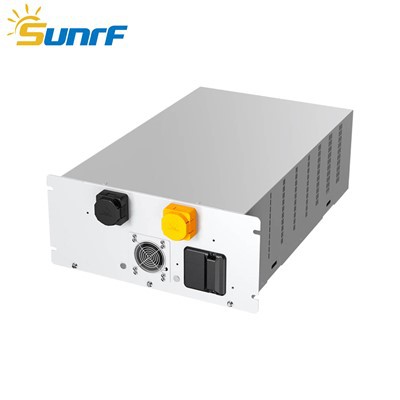
The main function of the inverter is to convert DC power into AC power. The inverter consists of an inverter bridge, control logic and filter circuits, and realizes the conversion of electrical energy through complex power electronics technology and pulse width modulation (PWM) technology.
Inverters are widely used in different fields:
Household appliances: Inverters can convert low-voltage DC power (such as 12 or 24 volts) into 220 volts AC power to meet the needs of various electrical appliances in the home.
Renewable energy: In renewable energy systems such as solar power generation and wind power generation, inverters convert DC power into AC power to achieve integration with the power grid and improve energy efficiency.
Electric vehicle charging: Inverters play a key role in electric vehicle charging systems, converting AC power into DC power to meet the charging needs of electric vehicles.
Emergency power supply: In the event of a power outage or emergency, the inverter can convert the DC power stored in the battery into AC power to provide emergency power for important places.
Industrial Automation: Inverters are used for motor drive in industrial automation systems. They can improve production efficiency and reduce energy consumption by adjusting the output voltage and frequency.
The working principle of the inverter is based on power electronics technology and pulse width modulation (PWM) technology. After the DC power is input into the inverter, it is processed by the rectifier and enters the inverter bridge part. By controlling the on and off of the switching elements, the DC power is converted into high-frequency phased AC power, and then modulated into a sine wave or square wave of a certain frequency through PWM technology. Finally, the high-frequency harmonics are filtered out by the filter circuit to obtain a smooth AC output.