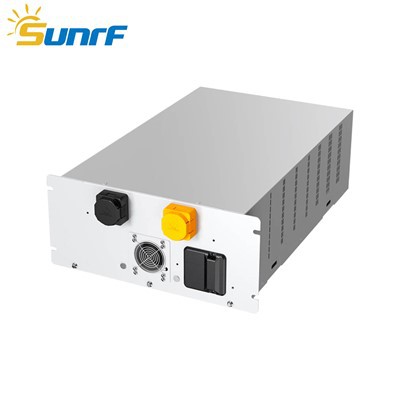
The process characteristics of inverters mainly include the following aspects:
High conversion efficiency: The inverter has high conversion efficiency, usually reaching more than 95%, thanks to its efficient switching devices and control strategies, which significantly reduces energy consumption and reduces heat dissipation requirements.
High-quality output voltage waveform: Through pulse width modulation (PWM) technology, the inverter can output AC voltage close to a sine wave, reducing the impact of harmonics on the power grid and load, and improving the stability and reliability of the system.
Multiple protection functions: The inverter has multiple protection functions such as short circuit, overload, over/under voltage, and overtemperature, ensuring that the equipment can automatically cut off the power supply under abnormal conditions to ensure the safety of equipment and personnel.
Good physical properties: The inverter usually adopts an all-aluminum shell, which has good heat dissipation and friction resistance, and can resist certain external force extrusion or impact to ensure the stable operation of the equipment.
Strong load adaptability: The inverter performs well when loaded, has high stability and adaptability, and can meet the needs of different loads.