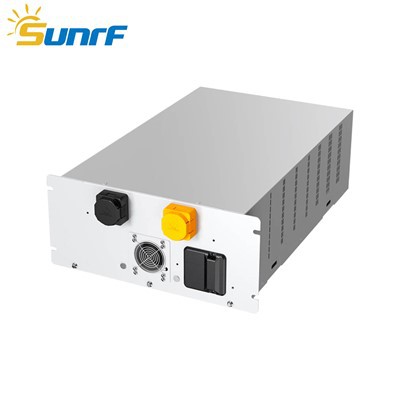
In today's complex and ever - changing social environment, emergency broadcast, as a crucial means of information dissemination, plays a vital role in responding to emergencies and safeguarding public life and property. To ensure the stable operation of emergency broadcasts, a reliable power supply system is of particular importance. In recent years, solar power supply systems have emerged in the field of emergency broadcasts due to their unique advantages. Especially, the solar power supply system equipped with an RS485 interface has brought a brand - new solution to emergency broadcasts.
The solar power supply system mainly consists of solar panels, a controller, a battery, and an inverter. By absorbing the light energy in sunlight, solar panels convert it into direct current. The controller adjusts and controls the charging process to prevent the battery from overcharging and over - discharging, thus extending its service life. The battery is responsible for storing electrical energy and providing power to the load when there is no sunlight or when the power consumption is high. The inverter converts direct current into alternating current to meet the power requirements of emergency broadcast equipment.
As a commonly used serial communication protocol, the RS485 interface has the advantages of strong anti - interference ability, long transmission distance, and high transmission speed. Adding an RS485 interface to the solar power supply system enables data communication and remote control among multiple devices, which is undoubtedly a huge advantage for emergency broadcast systems.
In emergency situations such as natural disasters and damage to power facilities, the power supply of the conventional power grid may be interrupted. However, the solar power supply system is not affected by grid failures and can independently provide stable power to emergency broadcast equipment, ensuring that emergency broadcasts can promptly release important information, such as disaster warnings, rescue guidance, and evacuation notices. For example, in an earthquake - stricken area where the power grid has collapsed, the emergency broadcasts equipped with a solar power supply system with an RS485 interface can still operate normally, transmitting rescue information to the affected people and guiding them to take correct actions.
Emergency broadcasts need to cover vast areas, including some remote mountainous areas, islands, and other places where it is difficult for the conventional power grid to reach. The solar power supply system is not restricted by geographical conditions and can be easily installed in these areas to provide power support for emergency broadcast equipment. The application of the RS485 interface enables data transmission and remote control among multiple emergency broadcast devices, making the coverage of the emergency broadcast system wider and the response speed faster.
After an emergency occurs, it is necessary to quickly establish an emergency broadcast system. The solar power supply system is easy to install, requiring no complex wiring or infrastructure construction, and can be rapidly deployed and put into use in a timely manner. At the same time, the application of the RS485 interface also makes the connection between systems simpler and faster, further improving the deployment efficiency of the system.
In the long run, the solar power supply system eliminates the need to pay electricity bills, reducing operating costs. Moreover, its maintenance is relatively simple, without the need for frequent replacement of components, reducing maintenance difficulties and costs. The application of the RS485 interface enables remote monitoring and troubleshooting, further reducing maintenance costs.