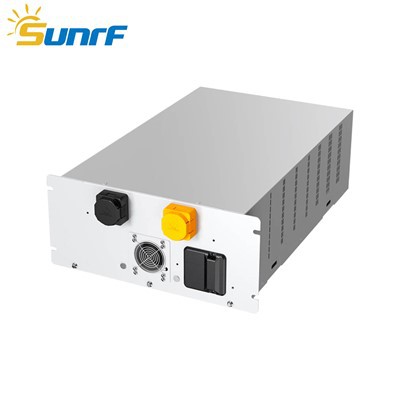
Tips for using the inverter include the following aspects:
Choose a suitable inverter: When choosing an inverter, you need to consider the total power of the equipment and choose an inverter with a rated power slightly greater than the total power, leaving room to prevent overload. Pure sine wave inverters are suitable for sensitive electrical appliances (such as computers and medical equipment), while modified sine wave inverters are suitable for general electrical appliances and are less expensive. Make sure that the inverter matches the battery voltage, which is commonly 12V, 24V, 48V, etc. Overload protection, short circuit protection, temperature protection, etc. are essential functions to ensure safe use.
Precautions for installation and wiring: The inverter should be installed in a well-ventilated, cool and dry place, away from heat sources, direct sunlight, and corrosive or explosive gases. Good ventilation helps to reduce the operating temperature of the equipment and extend its service life. The specific installation and wiring requirements of each inverter may be different, so be sure to read and follow the instruction manual provided by the manufacturer before operation. The positive and negative poles must be connected correctly. Incorrect wiring may not only cause damage to the inverter, but also cause fire or electric shock accidents. Using color-coded wires (usually red for positive and black for negative) can help avoid mistakes. Choose wires of appropriate specifications according to the maximum output current of the inverter to avoid wires that are too thin and heat up, or even cause fire. At the same time, use high-quality wire connectors and insulation materials to ensure that the connection is firm and well insulated.
Connect the battery and solar panel correctly: Before connecting the input and output of the power inverter, properly ground the machine casing. Make sure that the positive and negative poles of the inverter are correctly connected to the positive and negative poles of the battery, red for positive (+) and black for negative (-). The connection wire should be thick and pay attention to the length of the connection. Avoid placing anything on the inverter or covering it with other objects. The ambient temperature cannot be higher than 40℃.
Precautions in use: The DC input voltage of the inverter should be the same as the battery voltage. Charging and inversion cannot be carried out at the same time to avoid damage to the inverter. The time between two starts should be greater than 5 seconds to reduce the damage to the equipment caused by frequent starts. It is strictly forbidden to open the chassis for any operation. If you suspect that the inverter is faulty, you should cut off the input and output in time and ask qualified maintenance personnel to check and repair it.
Maintenance and care: Regularly check whether the connection wires and connectors of the inverter are loose or damaged to ensure that the equipment is operating normally. Keep the inverter and its surroundings clean to avoid dust accumulation that affects heat dissipation and operating efficiency. Perform regular maintenance and care as recommended by the manufacturer to extend the service life of the inverter.