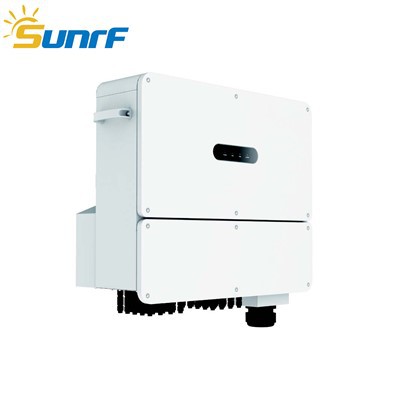
Hey there! As a supplier of Three Phase Hybrid Inverters, I've seen a lot of confusion out there about the differences between three - phase hybrid inverters and single - phase hybrid inverters. So, I thought I'd break it down in a simple way to help you understand which one might be the best fit for your needs.
Let's start with the basics. First off, what's a hybrid inverter? Well, a hybrid inverter is a key component in a solar power system. It can convert DC (direct current) power from solar panels into AC (alternating current) power that you can use in your home or business. It also has the ability to manage power flow between your solar panels, battery storage, and the grid. You can check out more about Solar Storage Inverter for Home on our website.
Single - Phase Hybrid Inverters
Single - phase hybrid inverters are quite common, especially in residential settings. They're designed to work with single - phase electrical systems, which are the norm in most homes. In a single - phase system, there's one alternating current waveform that supplies power.
One of the main advantages of single - phase hybrid inverters is their simplicity. They're relatively easy to install and are generally more affordable than three - phase inverters. If you have a small - to - medium - sized home with a modest solar power setup, a single - phase hybrid inverter might be all you need.
For example, if you have a 3 - 5kW solar panel system on your roof, a single - phase hybrid inverter can handle the power conversion and management just fine. It can take the DC power from your solar panels, convert it to AC, and either use it in your home or store it in a battery for later use.
However, single - phase hybrid inverters do have their limitations. They have a lower power capacity compared to three - phase inverters. So, if you have a large home with high power demands or a big solar power system, a single - phase inverter might struggle to keep up. Also, in some industrial or commercial settings where three - phase power is required, a single - phase inverter won't work at all.
Three - Phase Hybrid Inverters
Now, let's talk about three - phase hybrid inverters. These are a bit more complex but offer some significant advantages, especially for larger applications.
In a three - phase electrical system, there are three alternating current waveforms that are out of phase with each other by 120 degrees. This results in a more constant and balanced power supply. Three - phase hybrid inverters are designed to work with these three - phase systems.
One of the biggest benefits of three - phase hybrid inverters is their higher power capacity. They can handle much larger solar power systems and can supply power to high - demand appliances and equipment. For instance, if you have a factory, a large commercial building, or a multi - unit residential complex, a three - phase hybrid inverter is the way to go.
Our Three Phase Hybrid Inverter is a great option for such applications. It can efficiently manage the power flow between your solar panels, battery storage, and the grid, even in high - power situations.
Another advantage of three - phase hybrid inverters is their better power distribution. Since they work with three phases, the load is spread more evenly across the system. This reduces the stress on individual components and can lead to a more stable and reliable power supply.
However, three - phase hybrid inverters do come with some drawbacks. They're more expensive than single - phase inverters, both in terms of the initial purchase price and the installation cost. They also require a more complex installation process, as they need to be connected to a three - phase electrical system.
Key Differences
Let's summarize the key differences between three - phase and single - phase hybrid inverters:
Power Capacity
As mentioned earlier, three - phase hybrid inverters have a much higher power capacity. They can handle large solar power systems and high - demand loads, while single - phase inverters are better suited for smaller systems and lower power requirements.
Electrical System Compatibility
Single - phase hybrid inverters work with single - phase electrical systems, which are common in homes. Three - phase hybrid inverters, on the other hand, are designed for three - phase systems, which are typically found in commercial and industrial settings, as well as some larger residential properties.
Cost
Single - phase hybrid inverters are generally more affordable, both in terms of the purchase price and installation. Three - phase inverters are more expensive but offer higher power capabilities and better power distribution.
Installation Complexity
Single - phase inverters are easier to install, as they only need to be connected to a single - phase electrical system. Three - phase inverters require a more complex installation process, as they need to be connected to a three - phase system.
Our Three - Phase Hybrid Inverter Offering
We offer the SUN - KTL 60 - 110KW Smart Hybrid Inverter for Home Energy System, which is a top - of - the - line three - phase hybrid inverter. It's designed to meet the high - power demands of large homes, commercial buildings, and industrial facilities.
This inverter has advanced features such as intelligent power management, high - efficiency power conversion, and seamless integration with battery storage systems. It can also be easily monitored and controlled remotely, so you can keep an eye on your solar power system's performance from anywhere.
Which One Should You Choose?
So, how do you decide between a three - phase and a single - phase hybrid inverter? It really depends on your specific needs.
If you have a small home with a basic solar power setup and a single - phase electrical system, a single - phase hybrid inverter is probably the best choice. It'll be cost - effective and easy to install.


On the other hand, if you have a large property, high power demands, or a three - phase electrical system, a three - phase hybrid inverter is the way to go. It'll be able to handle the load and provide a more stable and reliable power supply.
Contact Us for Purchase and Consultation
If you're still not sure which type of hybrid inverter is right for you, or if you're interested in purchasing one of our products, don't hesitate to get in touch. Our team of experts is here to help you make the best decision for your solar power system. We can provide you with detailed information, answer your questions, and guide you through the purchasing process.
References
- Solar Power Basics: Understanding the different types of electrical systems and how inverters work.
- Industry Reports: Insights on the market trends and performance of single - phase and three - phase hybrid inverters.